Cleaning a tile roof without breaking it
Dark streaks on roof tile are common in South Florida, but removing them should not mean cracked tiles or damaged finishes. We explain how to plan a gentler cleaning and respond to an association notice.
By the USA Roofing team · · 5 min read

Start by checking what needs cleaning
Dark streaks across a tile roof can make the whole house look neglected. In South Florida, humidity, frequent rain and shaded roof slopes give algae and mildew favorable conditions. We often see darker patches below overhanging trees and along areas that stay damp after nearby tile has dried.
But not every mark is biological growth. Tile can show weathering, mineral deposits, runoff stains or changes in its surface finish. Cleaning cannot necessarily return an older roof to its original color, and trying to force that result can damage the surface.
Before hiring a cleaner, take photographs from the ground and look for uneven tile rows, visible cracks or pieces collecting near the gutters. Mention any ceiling stains or recent leaks. Those concerns need a roofer's attention before someone adds water and foot traffic.
Appearance and roof condition are separate questions. A stained roof does not automatically need replacement, and a freshly washed roof is not proof that everything beneath it is sound.
High pressure can create a different problem
A tile roof is not a concrete driveway. An aggressive spray can damage a tile's surface or finish. A nozzle held too close concentrates that force in a small area, especially along an already worn edge.
Spray direction matters, too. Roof tiles overlap to shed rain downhill. Water aimed upward beneath those overlaps can reach places that ordinary rainfall does not. Blasting around flashings, roof penetrations and ridge details creates additional opportunities for water intrusion.
That does not mean every powered rinse is unsuitable for every tile. The appropriate method depends on the tile material, finish, condition and care instructions. A cleaner should be able to explain those choices before starting, rather than treating every roof the same.
Be cautious if the proposed solution to a stubborn mark is simply more pressure or repeated close passes. Some discoloration may remain after appropriate cleaning. A slightly uneven appearance is preferable to removing sound surface material in pursuit of a uniform color.
Foot traffic deserves its own plan
Cleaning equipment gets attention, but the route across the roof matters just as much. Tile can crack when weight lands on an unsupported portion. Hoses dragged across the roof can catch edges or disturb pieces, and repeated trips create more opportunities for damage.
Wet tile also makes access more hazardous. Stay off the roof yourself, including after the cleaner leaves. Ask for photographs instead of climbing up to inspect the result.
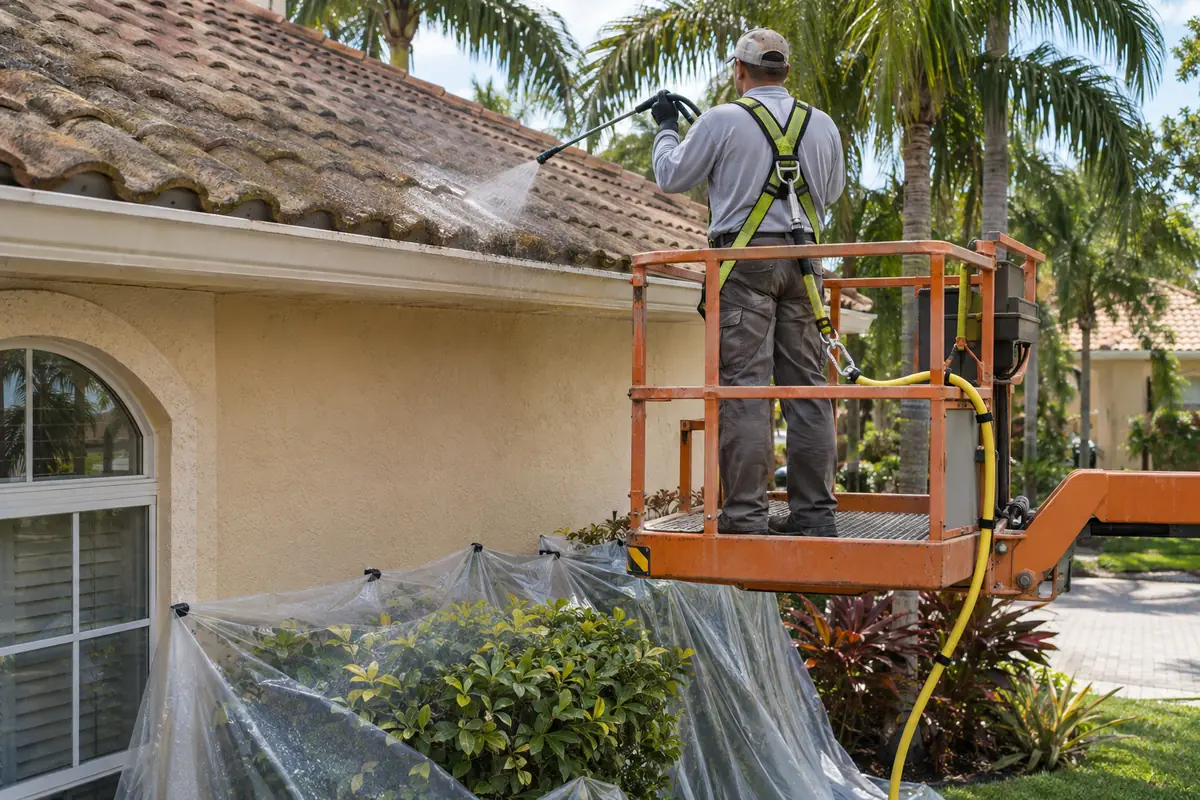
Before work begins, ask how the contractor intends to reach each roof slope. Suitable access equipment may reduce walking, depending on the house and surrounding space. If roof access is necessary, the contractor should explain how trained workers use fall protection and limit movement across vulnerable areas.
Ask who documents existing damage and how newly broken or displaced tiles are handled. A cleaning crew should not leave a cracked piece hidden in its original position. Our article on what a cracked or slipped tile means explains when a visible defect needs roofing attention.
Choose a gentler method that fits your tile
A gentler approach starts with identifying the roof, not choosing a catchy service label. Concrete and clay tile can have different finishes and care requirements. Painted or previously coated tile needs particular attention before a cleaning solution is applied.
Low-pressure application of a compatible cleaner, followed by rinsing when the product instructions require it, may be appropriate. The cleaner needs time to work according to its directions. Aggressive scrubbing or stronger mixtures are not automatic improvements.
The phrase soft washing alone does not tell you enough. Ask what solution is proposed, whether it is suitable for your tile and finish, and how it is applied. Do not mix cleaning chemicals yourself or accept an unexplained mixture.
- Confirm compatibility: Ask the contractor to check the tile's care instructions and any existing coating.
- Discuss a test area: Where appropriate, a discreet test can help reveal an unwanted change in color or finish.
- Protect the surroundings: Ask how landscaping, painted surfaces, metal fixtures and nearby outdoor belongings are protected.
- Plan for runoff: The contractor should account for gutters, downspouts, neighboring property and any pool below.
- Set weather limits: Ask how wind or approaching rain affects application and scheduling.
Request a written scope covering access, cleaning, rinsing, protection and cleanup. Keep cleaning separate from any proposed painting or coating. Those are different decisions, not routine additions needed to finish a wash.
An HOA letter needs clarification, not guesswork
An association notice about a dirty roof is a reason to read the request carefully. Do not assume the letter requires pressure washing, repainting or replacing the roof. Ask your association which roof areas are at issue, what appearance standard applies and what documentation it expects afterward.
If the notice names a cleaning method, ask whether a method consistent with your tile's care instructions is acceptable. Get the response in writing before scheduling work. A conversation with a neighbor is not a substitute for clarification from your association.
If a roof assessment reveals damage that should be addressed first, send the association photographs and the proposed sequence of work. Ask about an extension if necessary rather than rushing a cleaner onto a roof that needs repairs.
For a condo or another property with a shared roof, confirm who is responsible for authorizing maintenance before hiring anyone. Keep the notice, correspondence, contractor's scope and completion photographs together. These records help show what was requested and what was done.
Check the result without chasing a perfect color
After cleaning, compare photographs taken from similar positions. Ask for closer photographs of areas the crew accessed, along with any damage found or repaired. From the ground, look for shifted tile rows, fragments and debris left in gutters or landscaping.
If you notice a new ceiling stain or water entry, contact a roofer promptly and explain when the cleaning occurred. Cleaning is maintenance, not a leak repair. As we explain in your tile roof can hide worn waterproofing, clean tile does not establish the condition of the waterproofing below.
Future cleaning should follow the roof's condition and applicable care instructions, not an automatic promise that every stain can disappear. Keep overhanging vegetation professionally managed and arrange suitable debris removal without making the tile a walking surface.
If you are unsure whether your tile roof needs cleaning or repairs first, request a free roof estimate or call (954) 637-7029.