Your tile roof can hide worn waterproofing
The tile you see from the driveway sheds rain and protects the layers below. But the waterproofing is underneath, and its condition matters more than a clean, unbroken roofline.
By the USA Roofing team · · 5 min read

The tile and the underlayment have different jobs
Your tile roof can look tidy from the street and still leak. The rows may be straight, the color consistent and the visible tiles unbroken. None of that tells you whether the waterproofing beneath them is still sound.
Concrete and clay tiles shed much of the rain down the roof. They also shield the materials underneath from direct sunlight and exposure. But overlapping tiles do not form a sealed surface. Wind-driven rain can get beneath them, and water can reach the spaces around roof details.
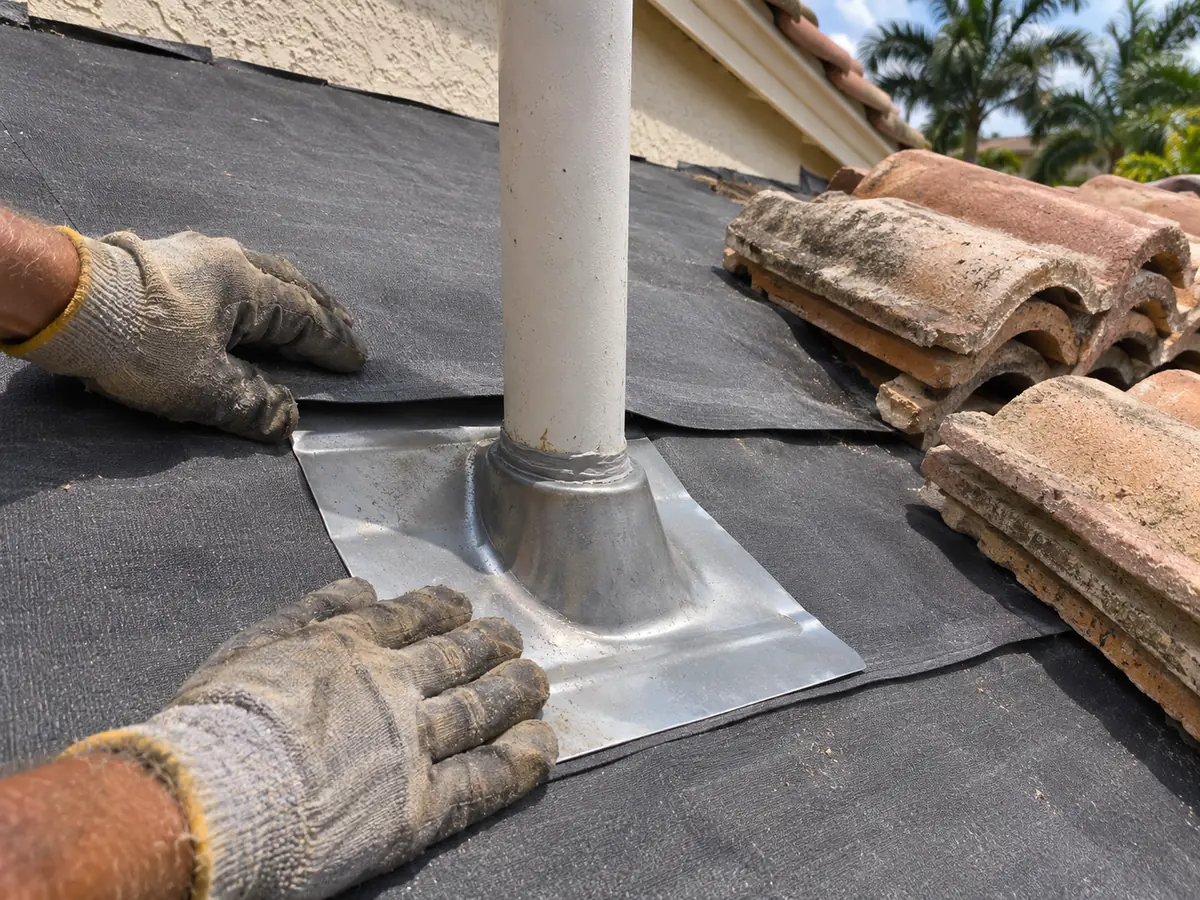
The underlayment is the waterproofing layer beneath the tile. It works with flashing, the material that directs water around joints and openings, to keep water away from the roof deck. The deck is the wood surface supporting the roof assembly.
Think of a tile roof as connected parts doing different work. The tile protects and sheds water. The underlayment and flashing manage water that gets below it. A problem in a hidden layer does not always change the roof's appearance.
That distinction matters when you compare repairs or read a description of tile roofs. Replacing visible tile and renewing the waterproofing underneath are not the same job.
Why the hidden layer can wear out first
On South Florida homes, roofing materials deal with strong sun, repeated rain and movement as the roof heats and cools. Tile provides protection, but it does not stop the materials beneath it from aging.
Depending on the material and its condition, older underlayment can become brittle, split or lose its seal at overlaps. Openings can also develop around attachment points. A weak connection between underlayment and flashing can create a path for water even when the surrounding tile looks intact.
We often see homeowners judge a roof by its surface. A recent cleaning may make the tile look better, but it does not reveal the condition of the membrane below. Fresh paint on surrounding trim does not tell you whether the nearby roof edge is dry.
Installation details matter, too. A leak beneath intact tile might come from a poorly integrated pipe flashing or a problem where the roof meets a wall. It does not automatically mean the entire underlayment has worn out.
A good-looking roof is not proof of sound waterproofing. A leak is not proof that the whole roof needs replacement. We need evidence of where the water enters and how far the problem extends.
What an inspection needs to establish
Start by telling us what you have noticed inside. A ceiling stain that returns during rain, peeling paint near an exterior wall or damp wood visible from a safe attic access can help narrow the search. Tell us whether the symptom is new or has returned after an earlier repair.
Water can travel along roofing materials or framing before it becomes visible indoors. The stain is a clue, not a reliable map of the entry point. We inspect the roof details above and around that area rather than assuming the leak starts directly overhead.
An inspection should address:
- The visible covering: displaced or cracked tiles and debris that interrupts drainage.
- The transitions: valleys, roof edges, pipe penetrations and places where the roof meets a wall.
- The concealed materials: underlayment, flashing connections and accessible evidence of deck damage.
- The repair history: earlier patches and whether leaks have appeared in separate areas.
Some concealed conditions cannot be confirmed without carefully removing tile. We should explain what needs to be opened, why it matters and how the area is to be closed afterward. Ask for photographs showing the finding, not just a photograph of the roof surface.
Do not lift tiles yourself to investigate. You can damage the covering or the waterproofing while trying to inspect it. If your concern began after severe weather, our guide to checking your roof safely from the ground covers that initial look.
A targeted repair or a larger reroofing project
A localized defect may support a localized repair. For example, a failed flashing connection with sound surrounding materials presents a different problem from deteriorated underlayment found across separate roof areas.
The useful question is not simply whether we can stop a particular leak. It is whether the surrounding materials are sound enough to support that repair. New material needs a suitable connection to the existing roof system. Patching into brittle or damaged material can leave weaknesses nearby.
When deterioration is widespread, replacing another visible tile does not address the underlying condition. A larger project may involve removing the tile, inspecting the deck, addressing damaged wood and installing new underlayment and flashing before the tile covering goes back.
Existing tiles may be reusable, but that requires an assessment. Their condition, attachment method, breakage during removal and availability of compatible replacements all matter. Do not assume that keeping the same appearance means every existing tile can stay.
Ask us to explain why we recommend the proposed scope. The answer should connect the work to documented conditions, including what remains uncertain until the roof is opened.
Compare the work beneath the tile
Before you approve a project, read the written scope for more than the tile selection. It should describe the underlayment system, flashing work, tile removal or replacement, and how concealed deck damage is handled if discovered.
Ask who handles permits, engineering and inspections. We use our own crews and handle that paperwork for our roofing work. If you own a condo or live in an association, ask your association about roof responsibility and approval requirements before scheduling work.
If you are buying a home, request available roofing permits and repair records. A description such as “tile roof in good condition” may refer only to what was visible. Ask what was actually inspected and whether anyone evaluated the concealed waterproofing.
You do not need to decide on a reroof from the driveway. You need a clear explanation of the roof's condition, photographs of relevant findings and a written scope that addresses the cause of the problem.
Schedule a free roof estimate or call (954) 637-7029 so we can assess your tile roof and explain the next step.