What a cracked or slipped tile means
A broken tile does not automatically mean you need a new roof. We look at where the damage sits, whether nearby tiles have moved, and what condition the material underneath is in before recommending repairs.
By the USA Roofing team · · 5 min read

A damaged tile needs attention, not an automatic reroof
You notice a broken corner on the driveway or a tile sitting lower than the row beside it. The next step is to arrange an inspection, not climb up and push it back.
An isolated broken tile can be a local repair. A pattern of cracked or slipped tiles is a symptom that deserves a wider look. Neither tells us the full condition of your roof from the street.
We start with questions: Is the damage clustered beneath a tree? Does it follow a route toward rooftop equipment? Are neighboring tiles also out of position? Has the same area needed attention before?
The repair should address what caused the damage, not just cover the visible gap. Replacing a tile without checking its support, attachment and surroundings can leave the original problem unresolved.
How tiles get cracked or knocked loose
Concrete and clay tiles shed rain well, but they can break under concentrated pressure. A misplaced footstep during roof access can crack a tile, even when the person walking across it does not notice damage at the time.
We often see damage around areas people need to reach for maintenance. A trail of cracks near rooftop equipment gives us a reason to ask about recent service visits. It is a clue, not proof of who caused it.
Branches can break tiles when they fall or strike the roof. A limb resting against the roof can also rub or disturb the covering. Leave removal of anything caught on the roof to professionals who can plan access without adding damage.
Age matters, but it is not a diagnosis by itself. Older roofs may have weathered tiles, deteriorated attachment materials or earlier repairs that no longer hold properly. Movement in the supporting assembly can also affect how tiles sit.
A slipped tile is different from a cracked tile. It may remain whole while moving out of its intended position. We check why it moved, including its attachment and support, rather than assume sliding it back is enough.
What a crack or gap exposes underneath
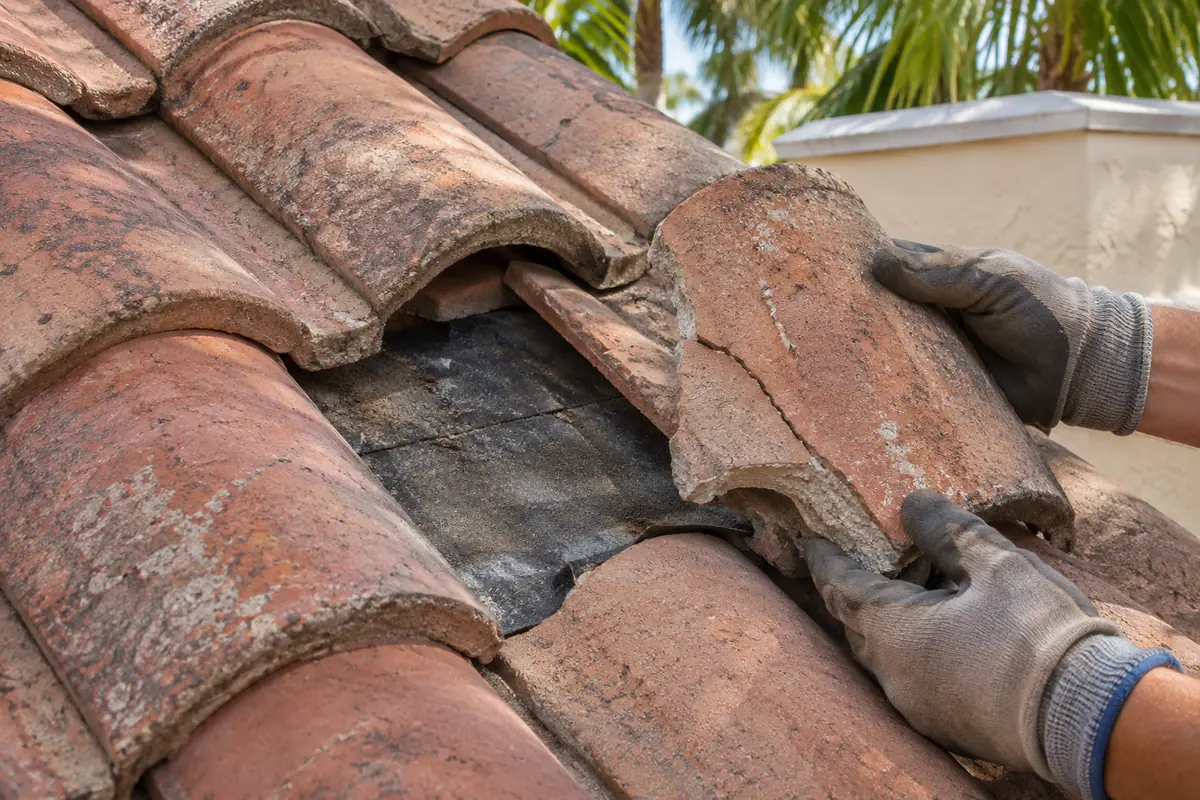
Overlapping tiles form the outer covering that sheds rain. Beneath them is underlayment over the roof deck, along with attachment and flashing details that vary by installation.
A small corner chip is not the same as a split through the tile or a piece missing from its overlapping edge. The location of the break matters. From the ground, you may not be able to tell whether the tile still covers the joint beneath it.
When a tile breaks apart or slips far enough, sunlight and rain can reach material normally sheltered by the covering. Falling fragments may also damage that material. We need to inspect the opening before deciding whether replacing the tile completes the repair.
No ceiling stain does not mean there is nothing to repair. The layers underneath may still be keeping water out of the house, but leaving them exposed is not a maintenance plan.
Our article on hidden waterproofing beneath a tile roof explains that separate issue in more detail. Here, the question is whether the visible damage is isolated or points to trouble around it.
The pattern helps explain the problem
We look beyond the tile that caught your eye. The arrangement of nearby damage helps us decide where to inspect next.
- Cracks along an apparent walking route: These can suggest concentrated foot traffic. We check adjoining tiles for less obvious breaks.
- A cluster beneath an overhanging branch: This gives us a reason to look for impact marks and damage hidden by debris.
- Several tiles slipping in the same area: This calls for a closer look at attachment, support and previous repairs.
- Damage returning at a repaired spot: We check whether the earlier work addressed the cause and whether the replacement tile fits correctly.
- Damage near a valley or roof penetration: We also examine nearby drainage and flashing details instead of treating the tile alone.
These patterns guide an inspection. They do not establish the cause without closer examination, and they do not automatically justify replacing the roof.
Ask for photographs showing the damaged area and the findings beneath it. A recommendation should explain what needs repair, why that scope makes sense and what remains uncertain.
Stay on the ground and record what you see
Walking out to inspect a tile can create more broken tiles and puts you at risk of falling. A loose piece may shift underfoot. Do not use a ladder to reach over the edge or lift a tile yourself.
From a safe ground-level location, use your phone's zoom to photograph the visible damage. Include a wider view so we can identify the roof section. Note whether you found fragments below, heard a branch fall or noticed the change after someone accessed the roof.
If a tile appears loose above an entrance or walkway, keep people away from that area until it can be assessed. Do not stand beneath it for a better picture.
You do not need to survey the entire roof yourself. Our guide to checking a roof safely from the ground covers broader observations after a storm. For this repair, clear photos and a description of the location are a useful start.
What we check before recommending a repair
We inspect the affected tile, neighboring pieces, attachment and accessible material beneath the opening. A replacement needs the correct shape and fit, not merely a similar color. If the tile is no longer readily available, we explain the options before setting the scope.
Damaged underlayment needs attention before the covering goes back. We also look for a reason the tile slipped or broke. Surface sealant alone does not answer those questions.
For a condo or association-managed property, ask your association who is responsible for roof repairs before authorizing work. If permit requirements are unclear, check with your building department.
Request a free roof estimate or call (954) 637-7029 to arrange a closer look.