Why water keeps collecting on your flat roof
A flat roof should move rain toward an outlet, not leave it trapped in the same depression. We explain how we separate a blocked drain from a slope problem before recommending work.
By the USA Roofing team · · 5 min read

A flat roof still needs somewhere to drain
If rain keeps collecting in the same place on your flat roof, the next step is to find out why. Adding a coating without checking drainage can leave the original problem underneath a fresh surface.
On South Florida homes, a low-slope roof may cover a rear addition, garage or an entire living area. It can look level from the yard while having a slight slope that directs rain toward an edge, gutter or drain. Our flat roofs overview explains this roofing category.
Water remaining during a shower is different from a recurring puddle after surrounding areas have dried. We look at whether the water has an open route out, whether something interrupts that route and whether the roof surface has developed a depression.
As the rainy season eases, a dry stretch gives you a useful opportunity to arrange that assessment. A ceiling without a stain is not evidence that drainage is working properly. You do not need to wait for an indoor leak before asking us to investigate.
A blocked outlet and a low spot need different repairs
A flat roof may drain through an opening in a perimeter wall, called a scupper, through a roof drain connected to piping, or over an edge into a gutter. We start by tracing the intended route rather than assuming the puddle marks a hole.
Leaves and palm debris can collect at an outlet. A drain cover may have debris packed around it even when its exposed surface looks clear. A restriction farther along the drainage route can also affect how water leaves the roof.
If the outlet is clear but water remains away from it, we check the roof's slope. A depressed area, compressed material beneath the covering or a raised repair can interrupt drainage. Water may also collect behind the raised base around rooftop equipment.
These conditions call for different responses. Removing debris may resolve an obstruction. It does not raise a low spot. Likewise, patching a seam does not change the direction water travels across the roof.
We also distinguish the regular drainage outlet from any separate overflow opening. An overflow provides another escape route if water rises. It should not be blocked because it looks unused or because occasional discharge is inconvenient. Ask us to identify which opening serves which purpose.
Gather useful observations without walking the roof
You do not need to climb onto a wet roof to help us understand the problem. Use existing photographs, observations from a safe indoor vantage point or pictures taken during an earlier professional inspection. Do not lean out or move onto an adjoining roof for a better view.
Tell us what changes between rain and dry weather. A simple description of where water collects and what you notice below is more useful than a guess about which coating to buy.
- Location: Does the reported puddle sit near a wall, drain, equipment base or the middle of the roof?
- Pattern: Does it recur in the same place, or did it appear after recent roof work?
- Discharge: From the ground, have you noticed water leaving the usual outlet or a separate overflow?
- Interior changes: Have ceiling stains, peeling finishes or drips appeared beneath that roof area?
- Previous work: Do you have photographs or paperwork describing patches, coatings or drainage alterations?
We often see homeowners focus on a dark ring left after a puddle dries. That mark helps locate the area, but it does not establish whether the covering is leaking or whether the materials beneath it are sound. We need to examine the assembly.
If you own a condo, ask your association who should arrange roof access and inspection. Share your observations without attempting to clear a shared roof drain yourself.
Decide whether the roof needs maintenance or rebuilding
A coating is not a substitute for correcting drainage. Before recommending one, we check the existing covering, its attachment, the details around openings and the condition of the materials underneath. Suitability depends on the particular roof assembly and coating system.
If the roof is otherwise sound and an obstruction caused the backup, professional cleaning and maintenance may be the appropriate starting point. We then check whether water has a clear path across the affected area.
A localized defect may call for a repair that addresses both the damaged covering and the drainage detail. The proposal should explain what changes, not simply say that the puddle area gets another layer.
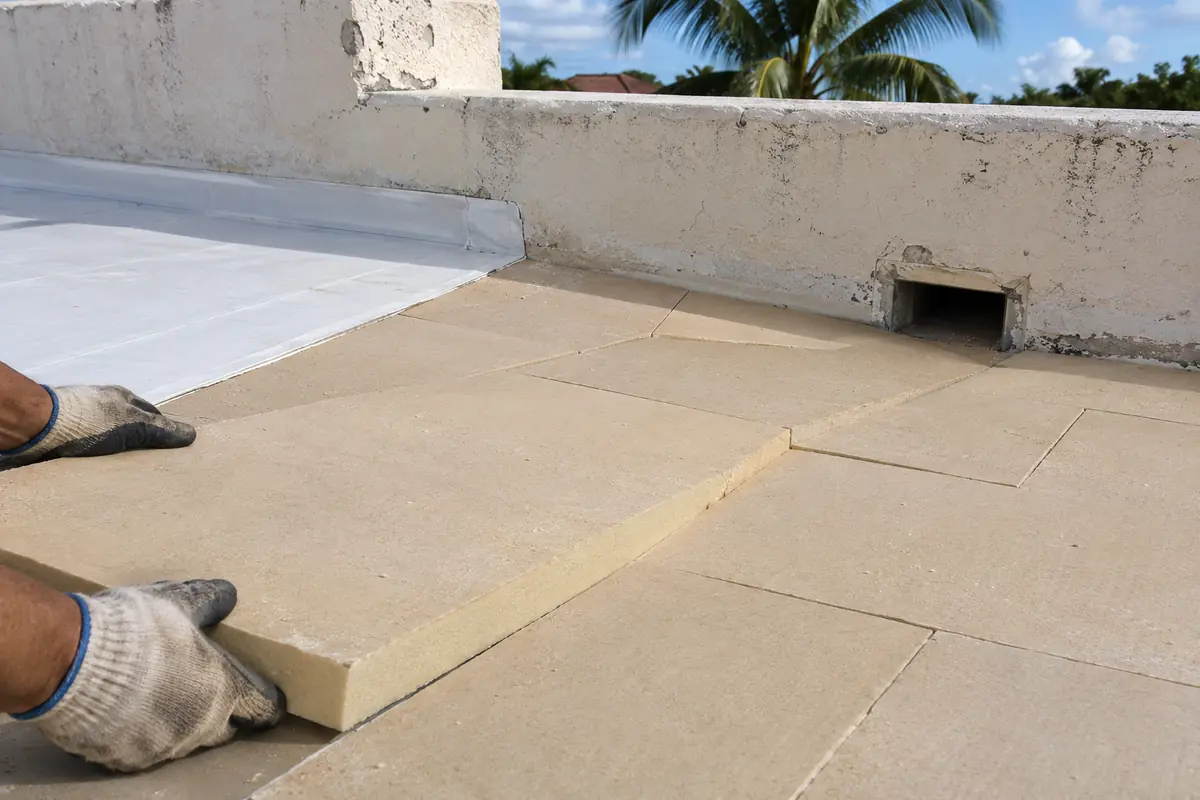
Where the roof lacks a workable slope, a reroofing plan may include tapered insulation. These shaped boards create a gradual fall beneath the roof covering. Small sloped features around equipment can also help direct water around an obstruction. Their layout needs to match the outlets and the rest of the roof.
A sagging deck or questionable framing needs further assessment rather than being hidden beneath new material. We determine whether engineering review is needed before proposing a correction. The aim is to address the reason water collects, not just cover its outline.
Ask for a drainage plan in the written scope
Before approving work, ask us to show you the affected area in photographs and explain where rain is supposed to go. You should understand whether the recommendation addresses debris, a damaged detail, a low spot or a broader reroofing need.
Ask what happens to the existing outlets, whether concealed materials need examination and how drainage is checked when work is complete. A proposal for a coating should explain why that treatment is suitable for the existing roof, including its drainage condition.
Changes to slope, drains or roof construction may involve permits and engineering. Check with your building department about your project. At USA Roofing, our own crews perform the roofing work, and we handle the permits, engineering and inspections involved in our scope.
If your home combines a tile main roof with a flat addition, ask us to identify each area separately in the proposal. Our article on hidden waterproofing beneath tile explains why the visible surface alone cannot settle the condition of that separate assembly.
For recurring flat-roof puddles, request a free roof estimate or call (954) 637-7029 so we can assess the drainage before recommending work.