What shingle grit in your gutters means
Finding sandy grit below a downspout can raise questions about your shingle roof. We explain why the condition of the shingles matters more than the pile on the ground, and what to document before cleanup.
By the USA Roofing team · · 4 min read

The grit is a clue, not a replacement verdict
You notice dark, sandy material on the splash block below your downspout. Or someone cleaning your gutters shows you a scoop of grit mixed with palm seeds and leaves. Does that mean your shingle roof needs replacing?
Not by itself. The useful question is whether loose material has washed away while the shingle surface remains covered, or whether the roof has developed exposed, worn patches. A gutter sample cannot answer that question on its own.
On South Florida homes, rain carries roof debris into gutters and downspouts. Material can collect between cleanings, then wash onto the driveway during another shower. Finding it today does not establish that it came loose today.
As the wetter season winds down, this is a practical item to include in a roof maintenance visit. We look at the shingles feeding that drainage area, rather than treating the contents of a gutter as a reason to recommend reroofing.
Why shingles shed some mineral granules
Asphalt shingles have a mineral surface over their asphalt coating. Those granules provide color and help protect the asphalt from sunlight. They are part of the roof covering, not simply a decorative finish.
A recently installed shingle roof can release loose excess granules left from manufacturing. Rain may carry them into gutters even though the embedded surface remains intact. That is different from established shingles developing bare areas as their protective surfacing wears away.
We also consider whether anyone recently accessed the roof. Foot traffic or equipment dragged across shingles can scuff the surface. A worn path toward a rooftop service area calls for a different investigation than scattered loose granules beneath a newly installed roof.
Gutters collect other material, too. Dirt, deteriorating leaves and debris from nearby work can resemble roof grit when wet. If your house has adjoining roof sections with different coverings, we identify which section drains to the outlet before drawing conclusions.
Neither the color nor the size of a pile tells you how much useful service remains in your roof. The surface condition and the surrounding roof details need to be examined together.
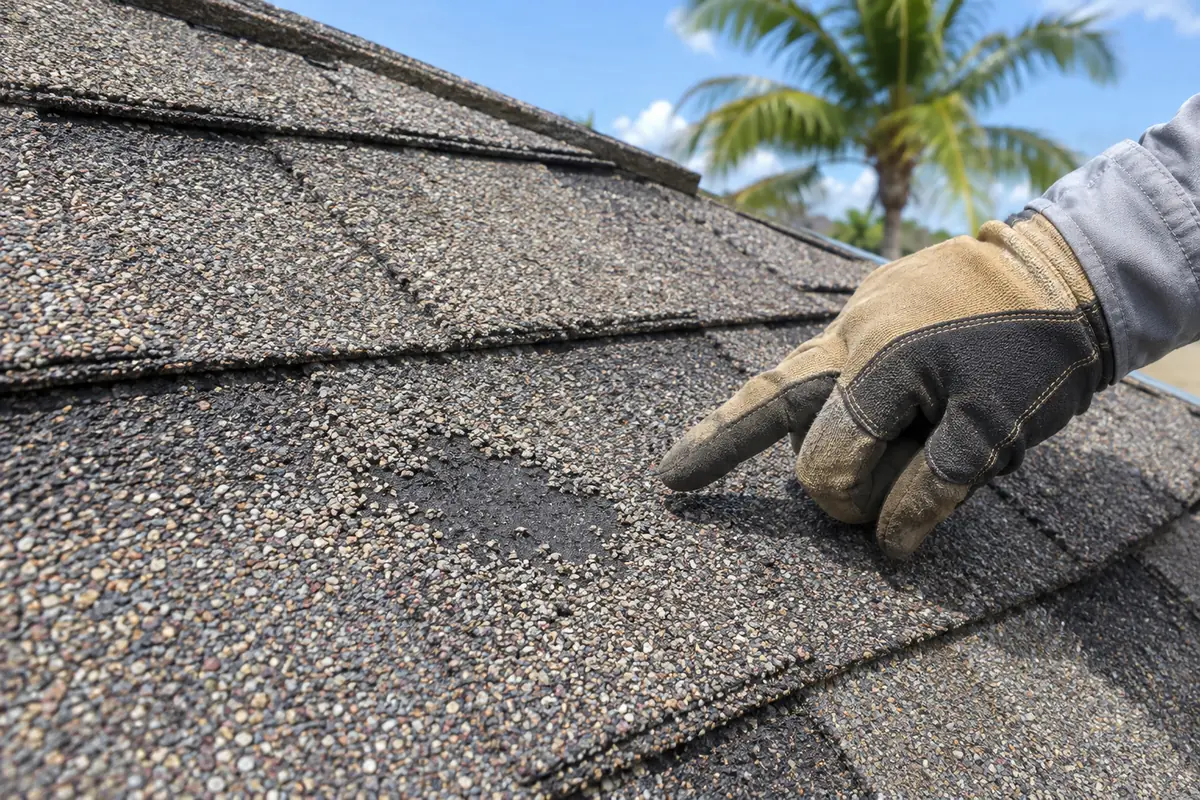
What makes surface loss worth inspecting
A shingle roof naturally has variations in color and texture. Architectural shingles also create shadows that can look like dark patches from the driveway. We do not diagnose exposed asphalt from a distant photograph alone.
During an inspection, we look for places where the granule covering has visibly thinned or disappeared. We compare those areas with nearby shingles and check whether the wear follows a particular pattern.
- Isolated scuffing: Wear follows a route across the roof or sits beside an area where someone worked.
- Localized bare patches: Exposed areas occur on particular shingles while surrounding surfaces retain their granules.
- Broad surface wear: Similar loss appears across separate roof areas, rather than beside a single access point.
- Other deterioration: Surface loss appears alongside cracking, curling or visible damage to the shingle itself.
These observations help define the next step, but they do not establish a cause by themselves. A claim that all loose grit proves storm damage, defective material or the need for replacement skips the actual inspection.
If you also notice missing shingles or folded edges, mention those separately when arranging the visit. Our article on missing or lifted shingles after a storm explains that different problem. Granule shedding alone is not the same finding.
Document the outlet without climbing onto the roof
Start with what you can safely see from the ground. Photograph the material below the downspout before it is swept away. Include a wider view showing which side of the house the outlet serves.
Tell us whether the roof was recently installed, whether the gutters were recently cleaned and whether anyone has worked above that part of the house. If you do not know, say so. An uncertain maintenance history is better than an invented explanation.
- Keep photographs from separate cleanups so the inspection does not depend on memory.
- Ask the gutter cleaner to photograph accumulated material before removing it, without disturbing the roof covering.
- Note whether grit appears at the same outlet again after cleanup.
- Report any ceiling stains or active leaks as separate concerns rather than assuming the grit explains them.
Do not rub shingles to see what comes off, scrape a dark patch or pressure wash the roof as a test. Those actions can disturb the surface and make the original condition harder to assess.
There is no need to leave a clogged gutter untouched while waiting for answers. Arrange safe cleaning, preserve photographs and let the roofer evaluate the covering. Keeping drainage open and investigating shingle wear are related maintenance tasks, but they answer different questions.
Ask for a recommendation tied to visible conditions
Before agreeing to work, ask to see photographs of the actual roof surface. The explanation should connect the proposed scope to what those photographs show, not just to a handful of material collected below.
If the surface remains covered and no related damage is found, documenting the condition and arranging follow-up may be appropriate. If damage is limited, we assess whether affected shingles can be replaced without damaging surrounding material. Broad deterioration calls for a wider reroofing evaluation.
A repair decision also depends on whether neighboring shingles can be handled and whether suitable replacement material is available. Ask what the proposed work addresses and what remains outside its scope. Adding loose grit over a worn patch is not equivalent to replacing a damaged shingle.
At USA Roofing, we explain the findings before recommending repair or replacement. You should understand whether the concern is loose excess material, localized damage or wider surface deterioration, and what evidence supports that assessment.
Arrange a free roof estimate or call (954) 637-7029 to have us assess your shingle roof.