Missing or lifted shingles after a storm
A shingle can settle back into place after lifting and still be damaged. We explain what missing tabs, creases and loose sealant bonds mean, what may be repairable and what to photograph safely.
By the USA Roofing team · · 5 min read

Start with what you can see safely
Shingle pieces in your yard or a bare patch above the garage deserve a roof inspection after a storm. So does an edge that now sticks up. You do not need a ceiling leak before asking us to check the roof.
Once conditions are safe, look from the ground. Use your phone's zoom to photograph changes without climbing a ladder. Stay clear of fallen branches, hanging gutters and downed wires. Do not pull on loose shingles or lift their edges to see underneath.
On South Florida houses, wind-driven rain can reach beneath damaged roofing even when the visible opening looks small. A dry ceiling does not tell us whether the covering, underlayment or attachments are intact.
If water is entering, request prompt attention and professional temporary protection. Move belongings away from the wet area if you can do so safely. Stay away from sagging ceilings and wet electrical fixtures.
Missing tabs, creases and loose bonds mean different things
Missing tabs or shingle pieces: Part of the exposed covering has torn away. The patch underneath might be another shingle layer, underlayment or exposed roof decking. A photograph from the driveway cannot always distinguish them. We inspect the opening and surrounding attachments before defining the repair.
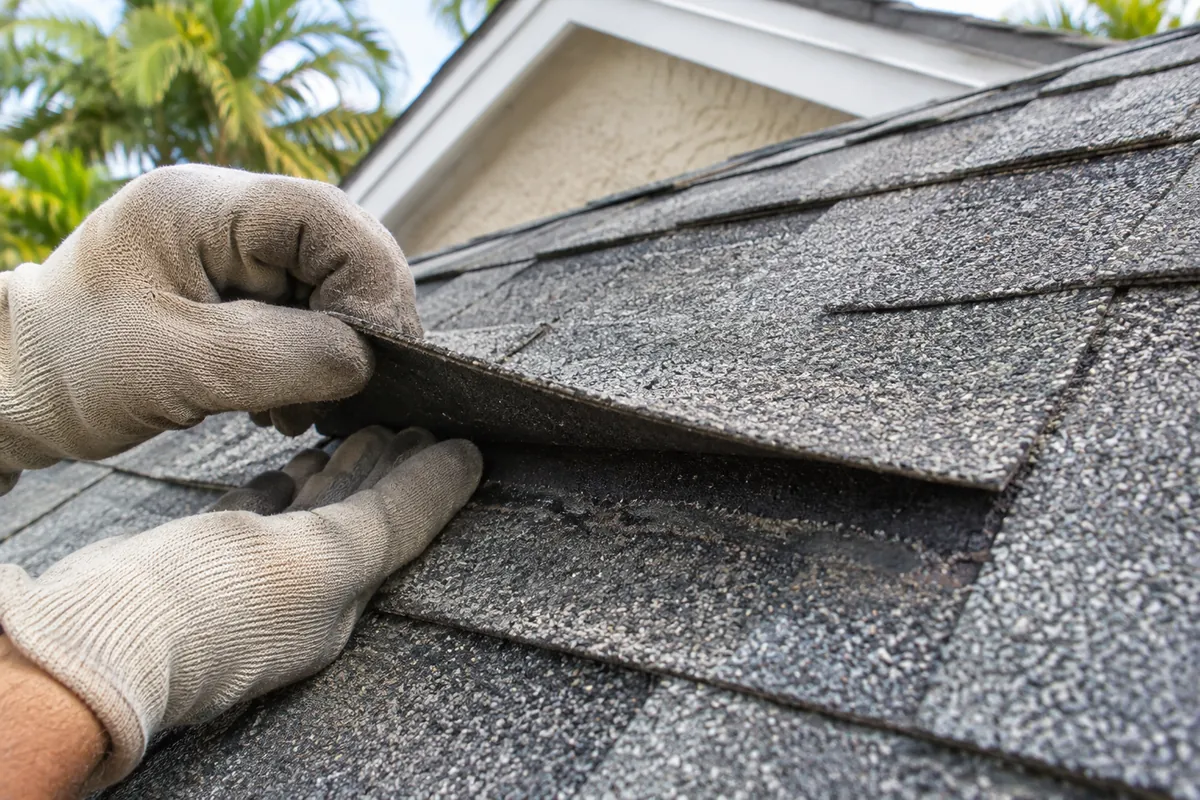
Creased shingles: A lifted shingle can fold back and develop a line across its surface. It may then lie flat again. That crease can indicate fractured material, not simply a loose edge. Pressing it down does not undo the damage.
A broken sealant bond: Shingles have sealant strips designed to bond overlapping surfaces together. A shingle may remain attached by its nails while its exposed edge is no longer bonded. That condition needs evaluation even if no piece has blown away.
These conditions can occur together. We also avoid assuming that every loose edge was caused by the latest storm. Installation problems, aging materials and debris beneath a bond can contribute. The inspection should describe what is present and separate visible findings from assumptions about the cause.
When a localized repair may make sense
A localized repair may be practical when damage is confined to a limited area and the surrounding shingles remain sound enough to work with. We need to check the material beneath the opening, the fasteners and the neighboring shingles that must be handled during replacement.
For missing or fractured shingles, the repair generally involves replacing damaged material and restoring the affected attachments and bonds. Smearing sealant across a torn tab is not the same as replacing it.
If a shingle has lost its sealant bond but has no other damage, professional hand-sealing may be appropriate under the product's installation instructions. We do not count on South Florida sunshine to restore a bond that has failed. The shingle's condition and the approved repair method matter.
Before recommending a patch, we look for:
- Compatible replacement shingles with the right shape and exposure.
- Surrounding material that can be handled without cracking or tearing.
- Sound decking and an underlayment condition that supports the proposed repair.
- Fastener problems extending beyond the visibly damaged spot.
A replacement patch may look different from weathered shingles. Appearance belongs in the conversation, but color alone does not establish whether a repair is technically suitable. Our shingle roofs overview explains the roofing option if replacement becomes part of the discussion.
What points to a roof that is letting go
A missing tab does not automatically mean you need a reroof. The concern grows when we find damage spread across separate roof slopes, loose shingles beyond the obvious opening or repeated attachment problems.
Brittleness also changes the decision. If surrounding shingles crack while being carefully handled for a repair, replacing the visible damage may disturb additional material. A patch needs a workable boundary, not just a place to stop adding shingles.
We look more closely when there are:
- Creases and tears scattered across the roof rather than clustered around an isolated impact.
- Numerous unbonded edges or shingles shifted out of alignment.
- Torn areas around fasteners or recurring losses near earlier patches.
- Deteriorated underlayment or damaged decking beneath the covering.
Those findings can support a broader repair or reroofing discussion. They do not establish the answer by themselves. We should be able to show you the conditions, explain why a smaller repair may be unreliable and describe the proposed scope. Roof age alone is not a substitute for that explanation.
Photograph the pattern, not just the bare spot
Your photographs help us understand what changed before temporary protection or repair work begins. Take them from safe ground locations. Leave roof-level close-ups to the person inspecting the roof.
- Start wide: Show the affected roof slope and recognizable parts of your own house so the location is clear.
- Move closer with zoom: Capture missing pieces, raised edges, exposed patches and visible crease lines without climbing.
- Include the surroundings: Photograph nearby displaced ridge shingles, branches or other visible damage.
- Document inside: Show ceiling stains or water entry with a wider room view and a closer detail.
- Keep the sequence: Save original files and note when you noticed the condition and whether it changed during later rain.
Photograph fallen shingle pieces where you find them. Do not climb onto the roof to retrieve material or deliberately bend shingles to demonstrate damage. Ask us for inspection photographs showing the surrounding roof as well as the damaged areas.
If you have questions about reporting damage, documentation or your policy, ask your insurance agent. An inspection documents roof conditions; it does not determine coverage.
Ask for a scope that explains the next step
Ask whether the recommendation addresses missing material, fractured shingles, broken bonds or a combination. The scope should identify the repair area, any underlying damage found and what happens if opening the roof reveals additional deterioration.
For a condo or association-managed property, ask your association who coordinates roof work before arranging repairs. Check with your building department about permit requirements for the proposed scope.
At USA Roofing, the roofing side of family-operated USA Windows & Doors, we serve Miami-Dade, Broward and Palm Beach counties from Sunrise. Our own crews perform the work, and we handle permits, engineering and inspections required for our roofing projects.
Request a free roof estimate or call (954) 637-7029 to have us assess the damage and explain your next step.