Why your metal roof looks wavy in sunlight
A standing seam metal roof can look smooth from the driveway and wavy from the sidewalk. We explain oil canning, the signs that deserve a closer look, and choices to discuss before ordering panels.
By the USA Roofing team · · 5 min read

What those waves between the seams mean
You step outside in the afternoon and notice ripples across your metal roof. The raised seams look straight, but the broad surfaces between them seem uneven. Earlier, from the same driveway, you barely noticed anything.
That appearance may be oil canning, the roofing term for visible waviness in a metal panel's flat surface. It describes an appearance, not a leak diagnosis. By itself, it does not establish that your roof is damaged or needs replacement.
On South Florida homes, bright sunlight can make small surface changes easy to see. Lower afternoon light can draw shadows across a roof plane that looked smooth under overhead sun. The changing view can be especially noticeable as the sun sits lower during late fall.
We separate the appearance question from the performance question. You deserve an explanation of the waves, but you also need to know whether seams, attachments and flashing are functioning as designed. A photograph alone cannot settle both questions.
Why a metal panel can develop waviness
Oil canning comes from stresses within the metal. Those stresses can develop during panel production, handling or installation. Sunlight often reveals the result rather than identifying its cause.
The surface underneath matters, too. A metal panel laid over an uneven roof deck can reflect those irregularities. When we evaluate waviness, we ask about deck preparation rather than assuming that the visible panel is the entire problem.
Metal also expands and contracts as it heats and cools. A standing seam assembly needs attachment and flashing details that accommodate movement as specified for that system. An added screw or poorly planned penetration can restrict movement where the panel needs it.
This is why tightening a roof until it looks flatter is not a sound homeowner repair. More restraint can introduce stress rather than resolve it. Do not add fasteners, press down a panel or ask someone to hammer out a wave.
Several causes can produce a similar appearance. We need to inspect the roof and review the installation details before recommending any correction.
What to record before an inspection
Start from the ground. Take an overall photograph showing the affected roof plane, then a closer view using your camera's zoom. Include a recognizable roof feature, such as a valley or roof edge, so we can locate the area.
Photograph the same area under different daylight conditions. Keep your viewing position similar. A wave that becomes more visible in afternoon light provides useful information, but changing visibility does not prove that everything underneath is sound.
Tell us whether the appearance has been there since installation or whether you noticed it after roof work, falling debris or a storm. If you do not know when it began, say so. There is no need to guess.
- Note whether the waviness spreads across broad panel surfaces or sits around a specific attachment or penetration.
- Photograph any sharp crease, dent, separated seam or displaced roof-edge trim that is visible from the ground.
- Describe any interior water stain separately, including whether it changes after rain.
- Gather the roofing proposal, panel selection paperwork and available installation photographs.
A sharp crease, an opening at a seam or active water entry needs a closer inspection. Do not dismiss those signs as cosmetic oil canning. They may involve a different problem, even when gentle waviness is also present nearby.
Leave roof access to the crew. Walking onto metal panels to take a better photograph can damage the surface and puts you at risk of slipping.
Discuss the panel appearance before ordering
If you are considering metal roofs, discuss oil canning while choosing the panel profile and finish. A small color chip cannot show how a broad roof surface looks across your house in direct sunlight.
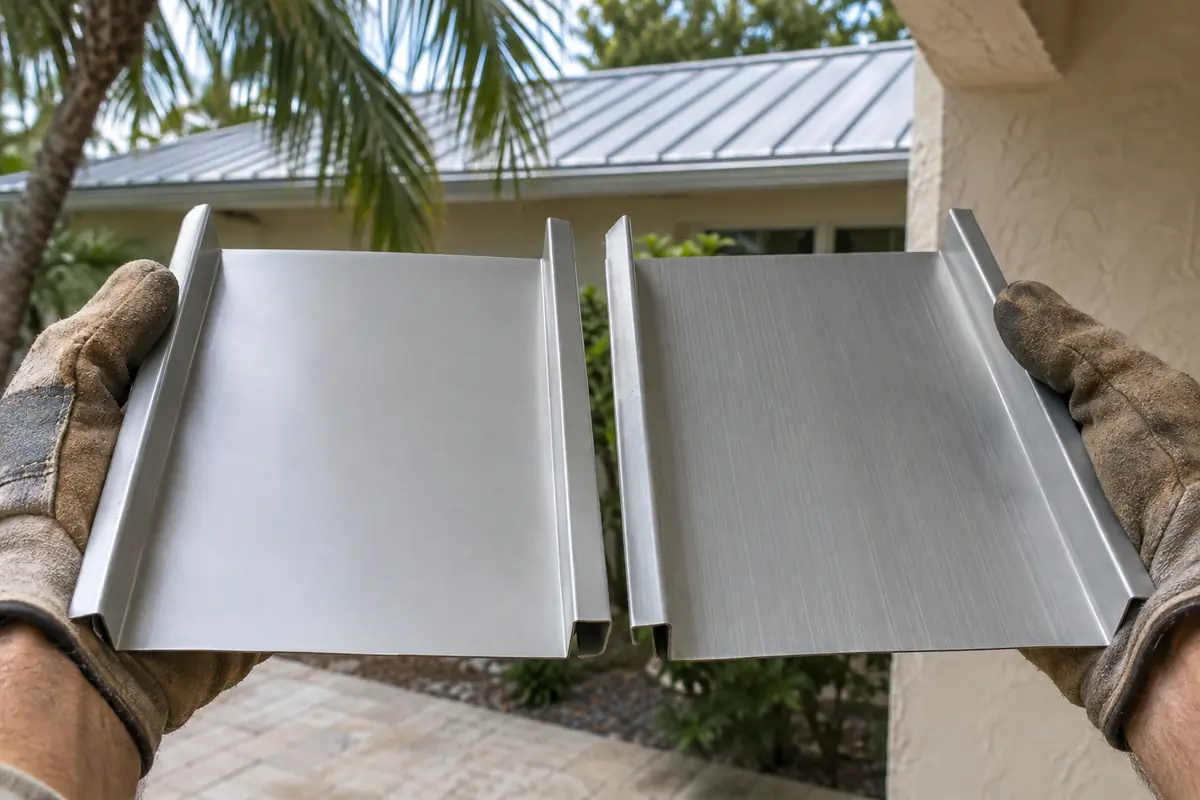
Ask to compare smooth panel surfaces with profiles that have shallow lengthwise ribs, sometimes called striations. These details can make waviness less noticeable. They change the finished look, so view them as a design choice rather than an invisible correction.
Gloss and viewing angle also affect what you notice. Ask to see a larger physical sample outdoors. Compare it in direct light and shade, while remembering that a loose sample does not reproduce the stresses or appearance of an installed roof.
Useful questions for the proposal discussion include:
- What does the selected panel surface look like in strong side lighting?
- What deck preparation is included before panels are installed?
- How does the selected assembly accommodate thermal movement?
- How are appearance concerns documented and reviewed after installation?
No panel choice eliminates every possibility of visible waviness. Careful preparation and installation matter, but a perfectly flat-looking roof under every lighting condition is not a realistic promise.
Base the next step on the finding
If an inspection finds surface waviness without evidence of damaged seams, flashing or attachment problems, the discussion may focus on appearance rather than repair. Ask us to explain what we checked and what supports that conclusion.
If we find an installation concern or damaged panel, the proposed work should identify that condition specifically. Replacing a panel without addressing an uneven supporting surface or restricted movement may leave the underlying cause in place.
Before agreeing to work, ask what the repair is intended to address, what surrounding material needs removal and what appearance differences may remain. A replacement panel can look different from weathered panels beside it. Check with your building department about permit requirements for the proposed scope, and ask your association about exterior appearance review where applicable.
At USA Roofing, our own crews handle roofing work across Miami-Dade, Broward and Palm Beach counties. For reroofing projects, we handle permits, engineering and inspections. We start by identifying what your roof needs, whether that is an explanation, a targeted repair or a replacement discussion.
Send us your ground-level photos and request a free roof estimate, or call (954) 637-7029 to arrange the next step.