Someone knocked on the door after the storm
A knock at the door is not enough reason to agree to roof work. We explain how to check who is offering the work, what their paperwork should show and what to read before signing.
By the USA Roofing team · · 5 min read

Start with their details, not their clipboard
Someone knocks after a storm and says your roof needs attention. They may have spotted something worth checking. That does not establish who they are, whether they are qualified to do the work or what you are being asked to approve.
We recommend keeping that first conversation simple. Ask for the business name, the visitor's name, a Florida contractor license number, a local street address and an office phone number. Take the information and check it independently before agreeing to an inspection or repair.
A shirt, truck decal or photograph of a damaged roof is not a credential. Neither is a claim that someone nearby has already hired them. You can listen without handing over documents or signing anything at the door.
If you still need to assess what happened, our guide to checking your roof safely from the ground covers that separate step. Here, the task is checking the person offering to work on it.
Look up the Florida license yourself
Ask for the license holder's name as well as the business name. Use Florida's official contractor license lookup, rather than relying on a screenshot or a page the visitor opens for you. Search by the license number and compare the record with the proposal.
Look for an active, current license and check the license type. A license for unrelated work does not establish roofing qualifications. If the record, business relationship or scope is unclear, check with your building department before moving forward.
- Compare the license holder and associated business with the names on the paperwork.
- Check that the license status supports the work being offered.
- Ask who is responsible for the roofing work and who supervises the crew.
- Have unexplained differences corrected before you sign.
A salesperson may not be the license holder. That alone does not settle whether the arrangement is appropriate. What matters is being able to trace the proposal back to the licensed contractor responsible for your roof.
Check the local address separately. Ask whether it is an operating office, a mailing address or a temporary location. Call the office using contact details you find independently. A local address is useful for follow-up, but it does not replace the license check.
Verify insurance and who comes onto your roof
Ask for current proof of general liability insurance and workers' compensation coverage, or documentation of an applicable exemption. A statement that the business is insured is not the same as documents you can verify.
Compare the insured business name with the contractor's paperwork. Look at the coverage dates and ask the listed insurance agent to confirm that the documents are current. If an exemption is presented, ask how the people actually performing the work are covered.
Ask directly whether employees or subcontractors would work on your roof. If another business is involved, get its role explained in writing and ask for the relevant license and insurance information. At our company, our own crews perform the roofing work. You should know who is coming to your home before scheduling begins.
Do not confuse the contractor's insurance with your homeowners policy. The contractor should explain the roof work, not decide what your policy covers. Ask your insurance agent about your own coverage and any claim-related paperwork.
Match the permit plan to a written scope
Ask whether the proposed work requires a permit, who applies for it and whose contractor information appears on it. Check with your building department about the requirements for your address and scope. A promise to handle permits should be specific enough to verify.
For permitted roofing work, ask to see the issued permit before that work begins. Compare the property address, work description and listed contractor with your agreement. If a different contractor appears, stop and get the relationship explained and confirmed with the building department.
If you are hiring a roofer to manage the job, do not treat a request to pull the permit yourself as routine paperwork. Ask your building department to explain the arrangement before agreeing. We handle permits, engineering and inspections for our roofing projects, and those responsibilities should be clear in the scope.
The scope also needs to describe the actual roof work. On South Florida houses, a barrel tile surface, a shingle slope and a low-slope addition can require different repair details. A line saying only 'repair storm damage' leaves too much unanswered.
- Identify the roof areas included and whether the proposal is for repair or replacement.
- Describe the roof covering, underlayment or membrane, flashing and affected penetrations.
- Explain how concealed damaged decking would be documented and additional work approved.
- State who handles permits, inspections, debris removal and protection of surrounding areas.
- Describe scheduling, weather interruptions and the paperwork provided at completion.
Read every document before you agree
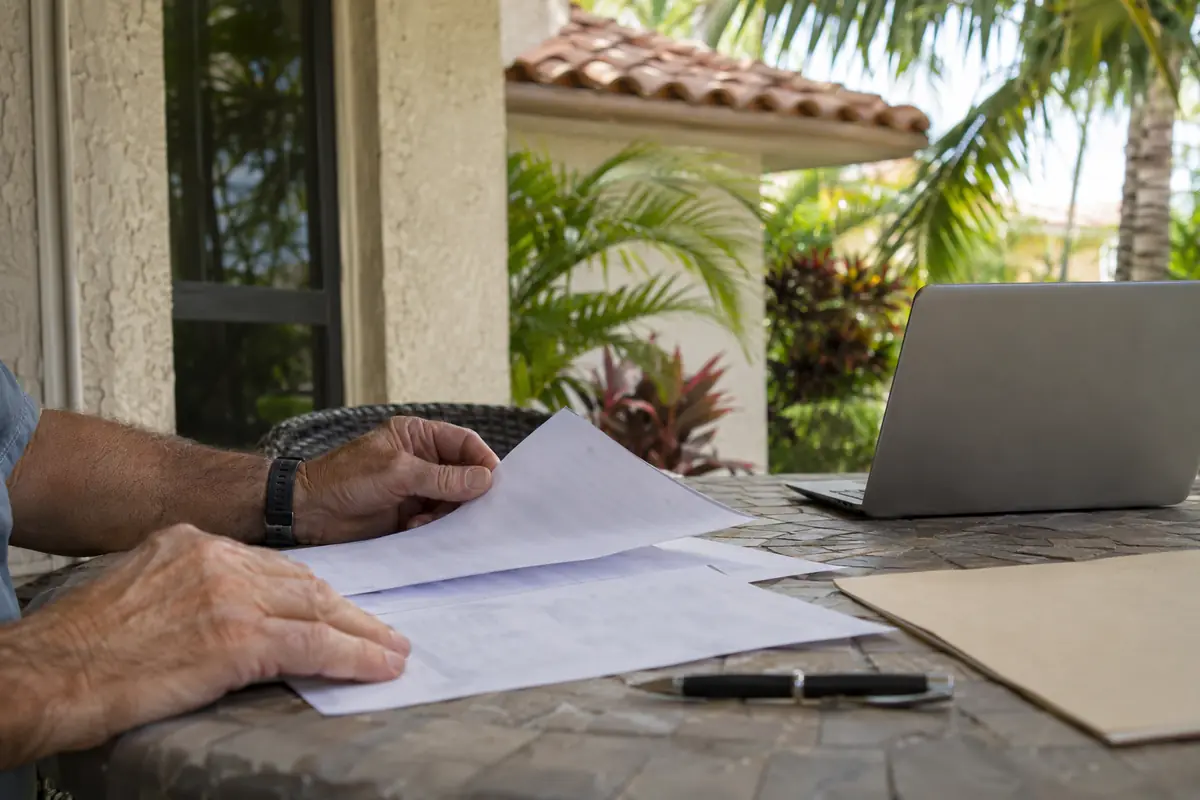
Read the entire document, including attachments and anything presented on a tablet. Ask whether it authorizes an inspection, temporary work or a roofing contract. Do not rely on someone calling it 'just a form.'
Look for blanks, missing pages and wording that differs from the conversation. Ask what each signature authorizes, whether it commits you to additional work and whether it gives anyone permission to act on your behalf. Get unclear wording explained before signing, and keep a complete copy.
If rain protection is being discussed, separate that scope from permanent repairs. Our explanation of what an emergency roof tarp actually does can help you distinguish the tasks. Agreeing to temporary protection should not leave you guessing about whether you also approved a reroof.
For a condo roof, ask your association who can authorize the work before signing. For any home, pressure to sign before you can verify the contractor is a reason to pause. A clear proposal should give you something concrete to review.
To discuss your roof and receive a written scope, request a free roof estimate or call (954) 637-7029.