Replacing jalousie and old awning windows
Old louvers can leave gaps even when the handle feels tight. We explain how we plan an impact window replacement around the existing opening, hidden conditions and your interior sill.
By the USA Windows & Doors team · · 5 min read

Why closed louvers can still leak
Jalousie windows have narrow glass slats that tilt together when you turn a handle. Older awning windows have larger glass panels that swing outward from the top, sometimes stacked within the same opening. Both appear in older South Florida homes, but they are different assemblies. We start by checking what you have and how it closes.
A jalousie window has many meeting edges: between the slats, at their ends and around the frame. Worn clips, bent operating parts and glass that no longer seats evenly can leave gaps. The handle may reach its stopping point without bringing every slat into proper contact.
With old awning windows, worn seals, corroded hardware or a panel that sits crooked can keep the sash from closing evenly. Paint buildup can also interfere with movement. Turning the handle harder does not repair those conditions and can damage the mechanism.
During wind-driven rain, water can enter through gaps in the assembly. It can also enter around the frame through deteriorated perimeter joints. Before recommending replacement, we look at both paths. A stain on the interior sill does not, by itself, identify where the water started.
Choose the replacement around the opening
Replacing louvers does not mean the new window needs to look or operate like the old one. For a wider opening, a horizontal roller is a common starting point. For a taller, narrower opening, a single hung window may fit the room better. Neither is an automatic answer.
We consider how you reach the lock, where furniture sits, how you use ventilation and whether the opening serves an emergency escape function. A replacement that fits the wall can still be the wrong choice for how the room needs to work.
A fixed picture window may suit an opening where ventilation and emergency escape are not needed. An impact-rated awning or casement may also be appropriate. Moving away from old awning windows does not require abandoning that operating style. The condition and construction of the old assembly matter more than its name.
Our guide to single hung and horizontal roller windows explains the operating differences. For a louver replacement, the next step is checking which approved configuration fits your actual opening and its use.
What happens to the existing opening
Replacing a window in the same location does not necessarily mean enlarging the wall opening. We measure the existing assembly and assess the surrounding construction before ordering. Decorative trim, thick stucco edges and the old frame can obscure the boundaries of the opening.
Once the old assembly is removed, we inspect the surfaces that receive the new installation. That may include masonry and a buck, the material lining the opening that forms part of the attachment detail. Loose material, deteriorated wood or damaged edges need attention before the new frame goes in.
A new window needs a sound opening and the correct attachment detail. Covering damage with trim does not address it. Some conditions only become visible during removal, so your written scope should explain how concealed repairs are handled.
We also check whether a divider between old window sections is part of the surrounding construction or the window assembly. It should not be removed simply to create a wider view. Keeping the wall opening does not necessarily preserve the same visible glass area, either. New frames and approved dividers can change the sightlines.
Your interior sill needs its own plan
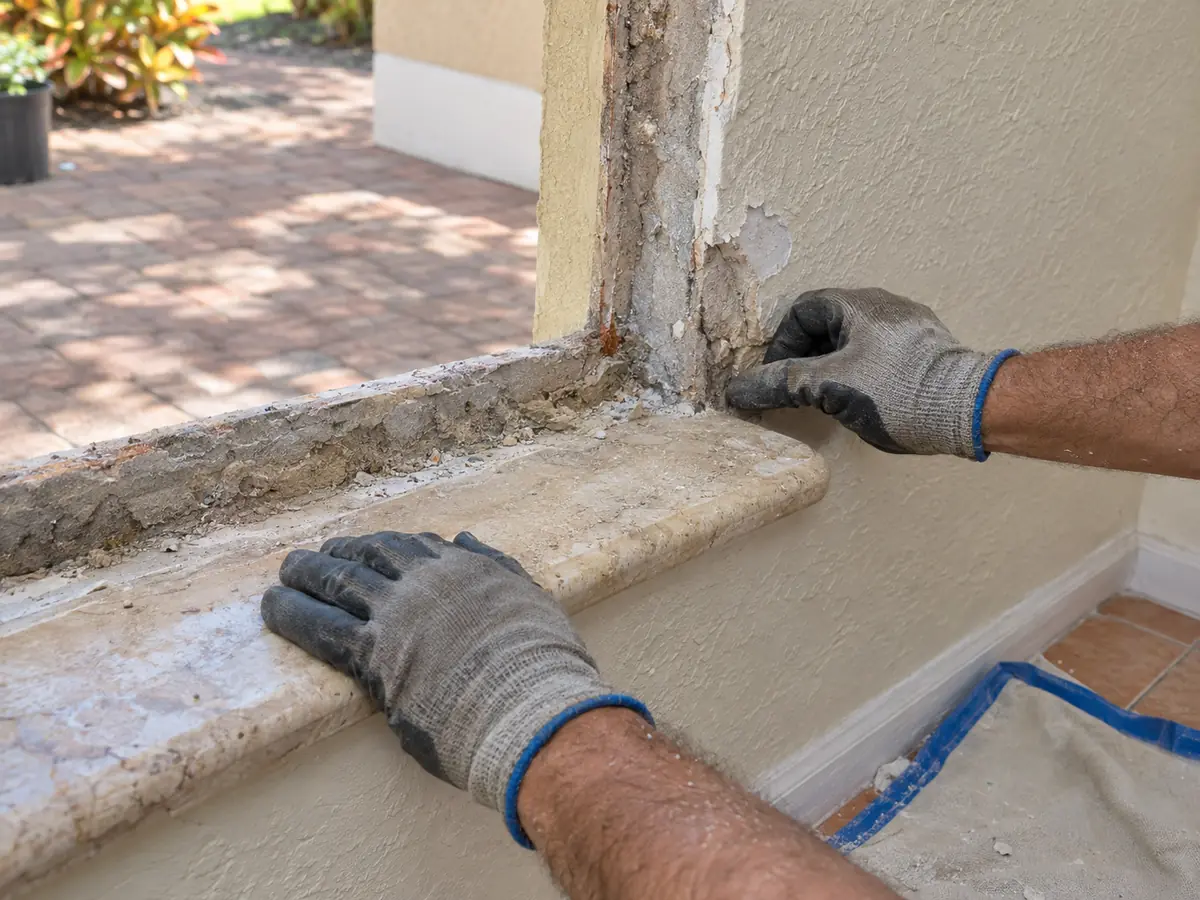
The interior sill is the ledge you see and touch inside the room. In older homes, it may be stone, tile, wood or a painted surface. It is not the same thing as the concealed bottom of the window opening, where installation and water-management details belong.
An existing ledge may be suitable to remain if it is sound and does not interfere with the new frame. But removal can expose unfinished edges, old sealant, chips or a gap where the previous assembly sat. A different frame depth can also change how much ledge remains visible.
We often see tile or stone fitted tightly against an old aluminum frame. Separating those materials requires care, and keeping every piece intact cannot be assumed. Discuss the sill before installation, especially if matching the existing finish matters to you.
- Identify which ledges and trim pieces are intended to remain.
- Ask whether cutting, patching or replacement is included.
- Clarify who handles paint, tile work and finish matching.
- Point out shutters, blinds or brackets attached near the frame.
Water-stained wood or loose tile also deserves inspection. Covering the surface without checking beneath it can leave an unresolved repair hidden beside the new window.
Installation includes drainage and finish work
An impact window is an assembly, not simply a glass upgrade. We replace the old unit with an approved system selected for the opening. The attachment, perimeter sealing and water-management details need to follow the applicable installation instructions and approved project details.
Where the new frame has drainage outlets, those paths need to remain clear. Adding sealant across every visible gap is not a substitute for understanding how the assembly drains. Inside, the frame-to-wall joint also needs appropriate sealing before finishes conceal it.
Removal may disturb exterior stucco and interior plaster or drywall near the frame. Ask where patching stops and painting begins. A structurally sound installation and an exact cosmetic match are separate parts of the scope.
We handle permits, engineering and inspections for our installations. If you belong to an association, ask about appearance requirements before choosing a frame color or changing the window layout. Keep the approved paperwork with your home records. Our article on reading an impact window label explains what to look for on the product itself.
Walk through the details before ordering
Show us which windows admit water, which handles bind and which ledges you want to keep. Photos taken during ordinary rain can help explain an intermittent problem without trying to recreate it. We then review the operating style, opening condition, sill treatment and finish responsibilities with you.
Schedule a free in-home estimate or call (954) 637-7029 to review your old windows and replacement options.