Choosing clear, tinted or Low-E impact glass
A darker window is not automatically better at controlling heat. We explain how coatings, tint and privacy glass work, then help you choose around the sunlight each room actually receives.
By the USA Windows & Doors team · · 5 min read

Start with heat, daylight and the view
A bright kitchen facing the morning sun needs a different conversation from a bathroom window facing a neighbor. Before choosing glass, we ask what bothers you now: afternoon warmth, glare across a screen, a dim interior or an exposed bathroom.
We often see homeowners use the word tint to describe every glass option that controls sunlight. But tint, Low-E coatings and privacy treatments do different jobs. They can sometimes be combined within an available impact-rated product, so this is not always a choice between separate alternatives.
Clear describes appearance. Low-E describes a coating. Privacy glass describes how clearly you can see through it. None of those descriptions, by itself, establishes impact approval. Our explanation of what is actually inside impact glass covers that separate part of the assembly.
Start with the room, then compare available glass options for the window or door you need. Choosing a color before understanding the sunlight can leave you with a darker room without solving the problem that started the project.
What Low-E does to heat versus light
Low-E means low emissivity. It is a very thin coating that changes how glass handles radiant heat. For South Florida homes, we look at solar-control Low-E options designed to limit incoming solar heat while still admitting useful daylight.
Heat and visible light are related, but they are not interchangeable. A solar-control coating can reduce incoming heat without making the glass look as dark as a strongly tinted option. That is useful when you want a bright room without accepting as much solar heat through the opening.
Low-E does not mean completely colorless or reflectionless. Depending on the glass assembly, you may notice a subtle hue or more reflection from certain angles. A clear-looking window may have a Low-E coating, and tinted glass may also include one.
We compare solar heat gain and visible light transmission separately. The former describes how much solar heat passes through the product. The latter describes how much visible daylight gets through. Ask us to explain both for the exact assembly being proposed, rather than assuming every Low-E option behaves alike.
A coating also does not remove direct sunlight from your eyes or make blinds unnecessary. If glare is the complaint, we discuss it separately from heat control.
How clear, gray and bronze change a room
Clear-looking glass is worth considering where preserving daylight and an open view matters. In a shaded living room, adding a strong tint can make an already subdued space feel darker. Clear-looking solar-control glass may offer a useful balance, depending on what is available for the opening.
Gray tint generally gives the view a cooler, more neutral appearance. Bronze adds a warmer cast. Both can reduce visible brightness, but the effect depends on the specific product. Neither color alone tells you how well the complete window manages solar heat.
We suggest looking beyond the glass sample itself:
- Look through it toward palms, sky and painted walls to see how outdoor colors change.
- Hold it beside your interior finishes, especially white cabinets and light tile.
- View it from outside against the stucco and frame color.
- Compare neighboring windows so a replacement does not create an unintended patchwork.
A small sample cannot reproduce a full opening, but it can reveal a color you dislike. View samples upright in daylight, not flat on a countertop. Ask whether the sample represents the proposed glass combination, including its coating.
Choose around the direction each room faces
Direction gives us a starting point. Actual shade matters just as much. A covered patio, nearby building or deep overhang can change what reaches the glass. We ask you to notice when sunlight enters and where it lands.
- East-facing rooms: Morning sun can create glare over a breakfast table or home office. Consider solar-control glass while checking that the room remains comfortably bright after the direct sun moves away.
- West-facing rooms: Afternoon sun can reach deeply into living spaces. Compare heat control and glare carefully, especially across broad sliding glass doors. A dark appearance alone is not enough information.
- South-facing rooms: Sun exposure changes with the season and the surrounding shade. Check how far sunlight travels indoors rather than assuming an overhang handles it throughout the year.
- North-facing rooms: These often receive softer daylight, although direct sun can still reach them seasonally. Preserving light may take priority, particularly where a porch or neighboring building adds shade.
You do not necessarily need identical glass throughout the house. However, different tints or coatings can look different from the street. We review comfort room by room and appearance across the whole wall before settling the order.
Use bathroom privacy glass for obscurity, not darkness
Dark tint is not dependable bathroom privacy. Visibility changes with the lighting on each side of the glass. When the bathroom is brighter than outdoors, someone outside may see in despite the tint.
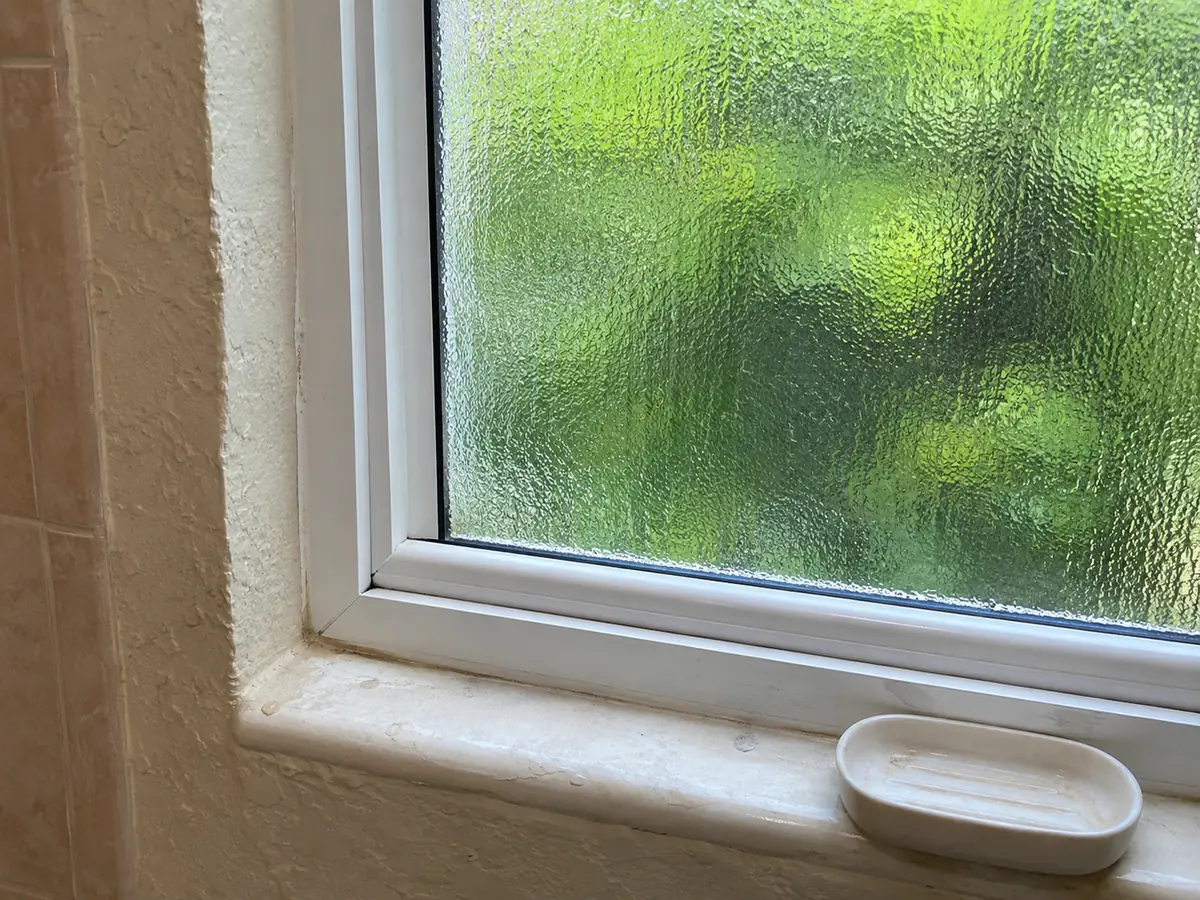
Obscure, textured or frosted-looking glass scatters light and makes the view less distinct. That can preserve daylight without leaving a clear view into the bathroom. Available patterns and treatments depend on the approved window or door assembly.
Obscure does not mean invisible. Silhouettes or movement may remain visible, especially when someone stands close to the glass. Review a sample with an object behind it at different distances. Think about the view from a neighboring walkway, balcony or window, not just from your own yard.
If the room needs additional privacy after dark, plan an appropriate interior covering too. Before ordering, ask your association about exterior appearance requirements. Do not assume an aftermarket film is interchangeable with factory-specified privacy glass; check compatibility and warranty conditions before adding anything.
Put the exact glass choice in the order
Before we finalize a selection, we review the glass description for each opening: clear-looking or tinted, the coating if specified, and any privacy treatment. Ask for those choices in writing. A note that simply says impact glass does not describe the appearance or solar-control features you discussed.
We also confirm that the selected combination is available within the approved assembly for your opening. Our guide to reading an impact window label explains the identification side without confusing it with glass color.
As a family-operated contractor serving South Florida, we help you compare these choices in the rooms where you live. Bring us your glare concerns, shaded corners and privacy needs so we can discuss a practical selection.
Schedule a free in-home estimate or call (954) 637-7029 to compare glass options for your home.