Ordering turtle glass for your beachfront home
Beachfront glass choices affect more than your view. Before we order impact windows or doors, we need to confirm your city's turtle lighting requirements and document the glass for the openings they cover.
By the USA Windows & Doors team · · 4 min read

Start with your address, not a tint sample
If you are replacing windows or glass doors on a beachfront home, ask about turtle glass before choosing the glass package. Coastal lighting requirements can affect which glass we order, which openings need it and what paperwork accompanies the permit.
The concern is indoor light reaching the nesting beach after dark. A window that looks comfortably shaded during the day may still let interior lighting show through at night. That makes this a specification question, not simply a choice between lighter and darker glass.
Start by asking your city's building department what applies to your address and proposed replacement. Ask which office reviews turtle lighting requirements and request the current guidance in writing. Do not assume a neighbor's installation establishes what your project needs.
Check every opening visible from the beach
Begin with the ocean-facing windows and sliding glass doors, but do not stop there. Depending on the local requirement, visibility from the beach may matter more than the direction an opening faces. A side window or glass door beside an angled balcony deserves a question during planning.
We look at the openings together rather than treating each room as a separate purchase. Corner windows, French doors, entry-door glass and sidelights can be easy to overlook when your attention is on a large ocean-facing slider. Include those openings when you ask the city to confirm the scope.
Bring photographs and a simple plan showing where the replacement windows and doors sit. For a condo, ask your association about its approval process as well. City requirements and association appearance requirements are separate checks; get both settled before authorizing fabrication.
- Which replacement openings fall within the turtle lighting requirements?
- Does visibility from the beach include side-facing glass?
- What glass documentation must accompany the permit application?
- Are there separate nighttime requirements for shades or interior lighting?
Put the glass specification into the order
“Turtle glass” is useful shorthand, but it is not a complete order description. The order needs the actual glass configuration and documentation showing how it meets the requirement confirmed for your property. A verbal request for dark glass leaves too much unresolved.
A term you may encounter is visible light transmittance. In plain English, it describes how much visible light passes through the glass. For this project, ask for documentation addressing the inside-to-outside requirement the city identifies. We should not infer that performance from the tint's color or a showroom nickname.
Before we release an order, the window and door schedule should identify the glass package for each affected opening. That means connecting the specified glass to the actual bedroom window, living room slider or glazed entry door, rather than adding a vague note that says turtle glass throughout.
Ask to see the specification in the written scope. If a glass package changes during product selection, have its suitability checked again before accepting the substitution. Similar-looking glass is not necessarily interchangeable.
Keep impact approval and turtle requirements separate
An impact-rated opening still needs the appropriate approval and installation details for your house. Turtle lighting requirements add another item to that selection process. Neither label should be treated as evidence that the other requirement has been addressed.
We need a window or door assembly that fits the opening's structural requirements and offers a documented glass option suitable for the coastal lighting requirement. The frame, glass and installation belong together in that review. Choosing a tint first and trying to fit it into an unrelated assembly later can complicate the order.
If you want a refresher on the identification paperwork, our guide to reading an impact window label explains what to look for. Keep the turtle glass documentation with those product records so you can find both after installation.
Do not assume aftermarket film is an acceptable substitute for the specified glass. If you are considering it, first ask the city whether that approach is acceptable and have compatibility with the selected window or door checked. Do not leave that decision until installation day.
Review the appearance before fabrication
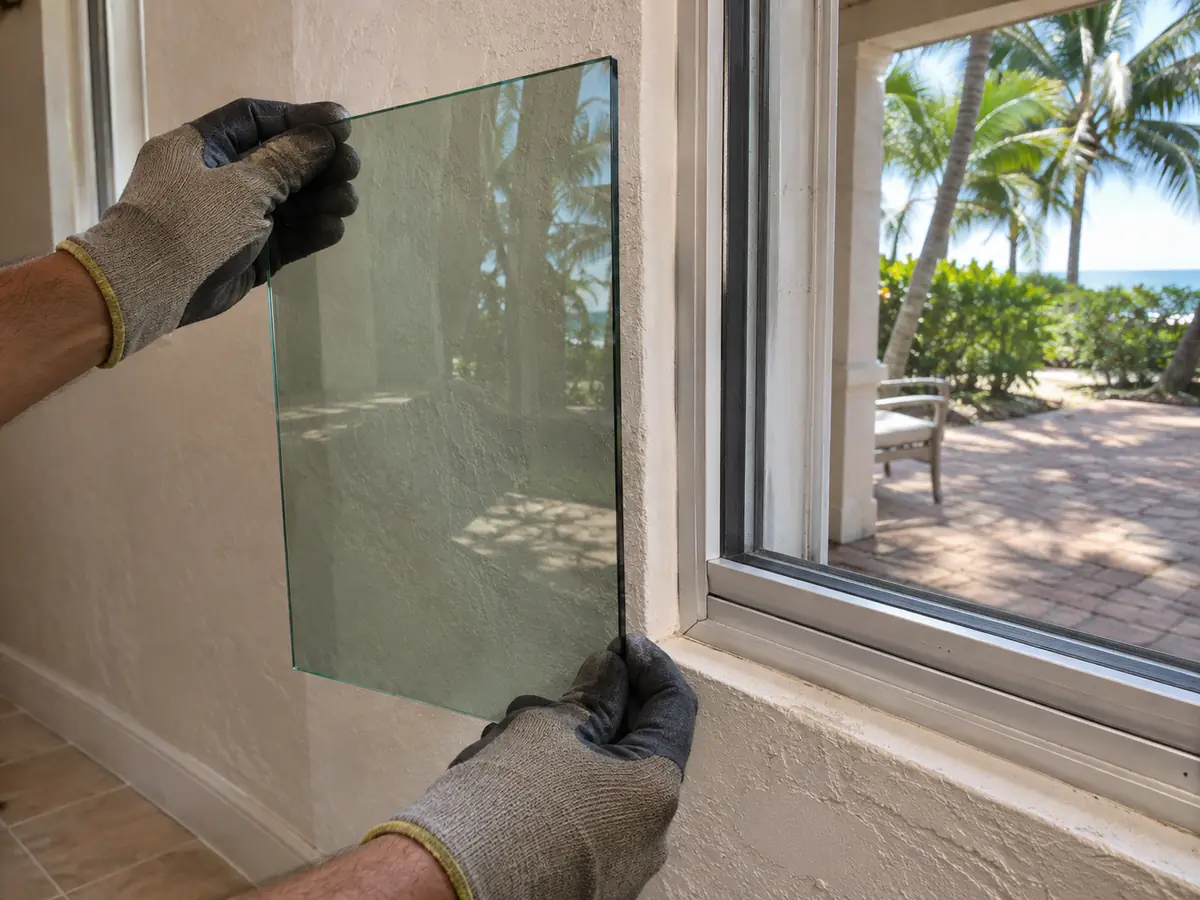
The paperwork matters, but you also need to understand what you are choosing to look through. Review a sample of the proposed glass in natural daylight. Look from inside toward the patio and from outside toward the room. Use it to judge appearance, not to establish compliance.
On South Florida homes, pale stucco, bright pavers and shaded interiors can make the same sample look different from either side. Existing glass beside a replacement can also make a tint difference noticeable. Ask about adjacent openings before deciding whether to replace only part of a visible group.
For a condo, submit the proposed glass appearance and frame finish through the association's review process. Do not assume approval of a frame color also covers the glass. Keep the written response with your project documents.
Our overview of clear, tinted and Low-E impact glass covers broader glass selection questions. Here, the next step is narrower: confirm that your preferred appearance is available in the documented package your project needs.
Close the paperwork loop before installation
At USA Windows & Doors, we handle permits, engineering and inspections, and our own crews perform the installation. Your part starts with sharing any city guidance and association requirements early. We can then address them in product selection instead of discovering an unanswered question after fabrication.
Before ordering, review the opening schedule, glass specification and required approvals together. After installation, retain the accepted product documents and completed permit records. Ask the city about any continuing nighttime lighting or window-covering requirements; selecting the glass does not settle every question about light reaching the beach.
Start with a free in-home estimate or call (954) 637-7029 to review your beachfront openings.