How to read an impact window label
A small mark on the glass or frame can help connect your window to its approval paperwork. We explain where to look, what the information means, and why installation stickers should stay put until final inspection.
By the USA Windows & Doors team · · 5 min read

Start with the label, then check the paperwork
A window can look solid without telling you whether it is impact-rated. Thick glass, a heavy frame and a familiar window style are not enough. We look for product identification that connects the installed window to its approval documents.
That identification may be on a permanent frame label, a marking or an etching. A separate mark on the glass may identify the glazing rather than the complete window. Temporary stickers can supply additional information during installation and inspection.
The useful question is not simply whether a label exists. It is whether the identification matches the window and the paperwork for your opening. Before cleaning a newly installed window, ask us to show you which marks are permanent and which stickers must remain for inspection.
Understand what a Miami-Dade NOA means
A Miami-Dade Notice of Acceptance, usually called an NOA, is a product approval document. It identifies an approved product and describes the conditions under which it can be used. It is not your home's permit, and it does not replace an inspection of the installation.
The High Velocity Hurricane Zone, or HVHZ, is Miami-Dade and Broward counties. Palm Beach County is outside the HVHZ but inside the wind-borne debris region. Products used in the HVHZ carry a Miami-Dade Notice of Acceptance or a Florida Product Approval for the HVHZ.
The complete approval matters because a window series can have different glass options and installation details. We check the selected configuration against the opening and the project requirements. An approval reference on a sticker is a starting point, not the entire answer.
Ask for the approval documents that apply to your actual windows, not just a sales brochure. Keep them with your permit records. If you want background on what happens during testing, our article on the test every impact window has to pass explains that separate part of the process.
Look at the glass corners and frame edges
Start from inside the house with good daylight. Look near the corners of the glass for a small etched or permanent mark. Reflections from a bright patio can make a faint mark difficult to see, so change your viewing angle before assuming nothing is there.
Next, inspect the accessible frame surfaces. Depending on the window, identification may be along a side jamb, on a sash edge or near the sill. Some labels become visible when you open an operable window normally. Fixed windows have no sash to open, so accessible label locations differ.
Do not remove trim, pry at glazing parts or lean outside to find a label. For a high or difficult-to-reach window, ask us to locate the identification safely.
A glass corner mark and a frame label serve related but different purposes. A mark identifying tempered glass alone does not establish that the complete window is impact-rated. Likewise, a glass identification mark may not include the approval information for the frame and assembly. Our explanation of what is actually inside impact glass covers the glass construction.
Read the information as a set
Label layouts vary. Some information appears permanently on the product, while additional details may appear on a supplemental sticker. Read the available identification together with the approval documents rather than expecting every detail in the glass corner.
- Product identity: Look for the maker identification and model or series. These help connect the window to the correct approval.
- Approval reference: Look for an NOA or Florida Product Approval reference, where provided. Ask us to match it to the project documents.
- Impact designation: Check whether the identified product configuration is impact-rated. Do not substitute a safety-glass marking for that verification.
- Performance and installation information: Labels or supporting documents may include ratings, glazing details and references to installation instructions. We check these against the approved work.
You do not need to interpret technical ratings yourself. Photograph the whole window and take a separate close-up of each accessible label. Note the room and window location so the images remain useful later. If a label is faded, painted over or missing, gather the permit and purchase records before drawing a conclusion about the window.
Know why different inspectors check identification
The building inspector checks the permitted installation. Product identification helps connect what is installed to the approved plans and supporting documents. The inspection also involves installation details. A matching label alone does not establish that the anchoring, attachment and surrounding work are correct.
A wind mitigation inspector has a different task: documenting features of the home for an insurance review. Accessible labels, approval records and installation documentation can help establish the opening protection present. Do not assume a permit inspection replaces that separate review.
A label on a living room window also does not establish the protection of every other opening. Keep records for windows and doors throughout the home, including any openings replaced during a separate project.
Florida insurers are required to offer discounts for wind mitigation features. The amount depends on the insurer and the policy, so ask your insurance agent what documentation they need and how verified features may affect your policy.
Leave temporary stickers until final inspection
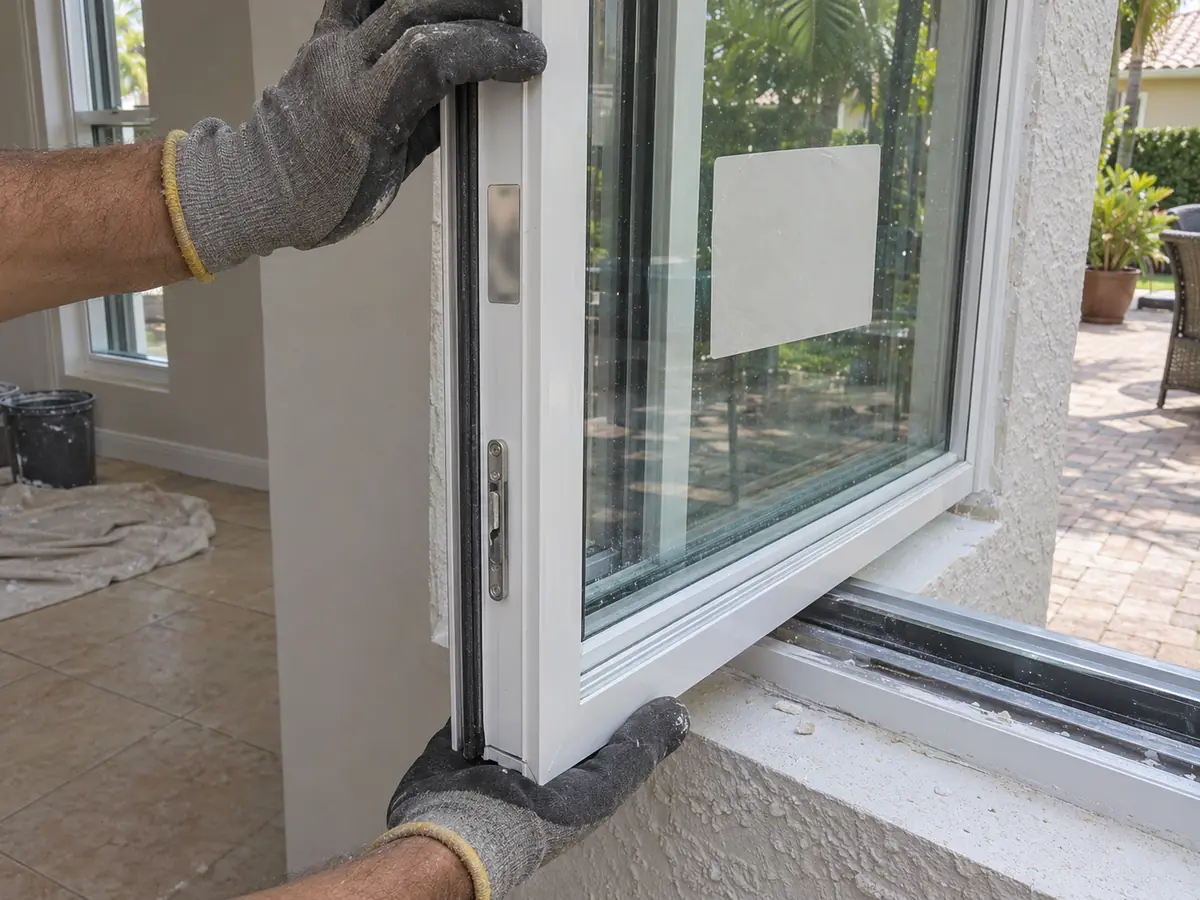
A large sticker on new glass can be distracting, especially where sunlight makes the adhesive edges stand out. Leave temporary product and inspection stickers in place until final inspection is complete and we confirm they can be removed. They may contain information the inspector needs to match the window to its documentation.
Tell anyone cleaning the house not to scrape or peel window labels during the project. Permanent identification stays in place after temporary stickers come off. If a sticker loosens, photograph it and contact us before discarding it. Do not move it to another window.
At handoff, ask us to identify the permanent marks and provide the approval and permit records for your installation. For a condo, ask your association which opening-related records it also keeps. We use our own crews and handle permits, engineering and inspections, so we can explain how your windows connect to the project paperwork.
Schedule a free in-home estimate or call (954) 637-7029 to discuss your impact window project.