Where casement and awning windows earn their place
Crank-out windows can make a hard-to-reach opening easier to use, but the sash needs room outside. We look at where casement and awning styles fit South Florida homes and where another style makes more sense.
By the USA Windows & Doors team · · 5 min read

Start with how the window opens
A window can fit the wall and still be the wrong choice for the space around it. We often see this at kitchen sinks, narrow side yards and patios, where the direction a sash moves matters as much as the view through the glass.
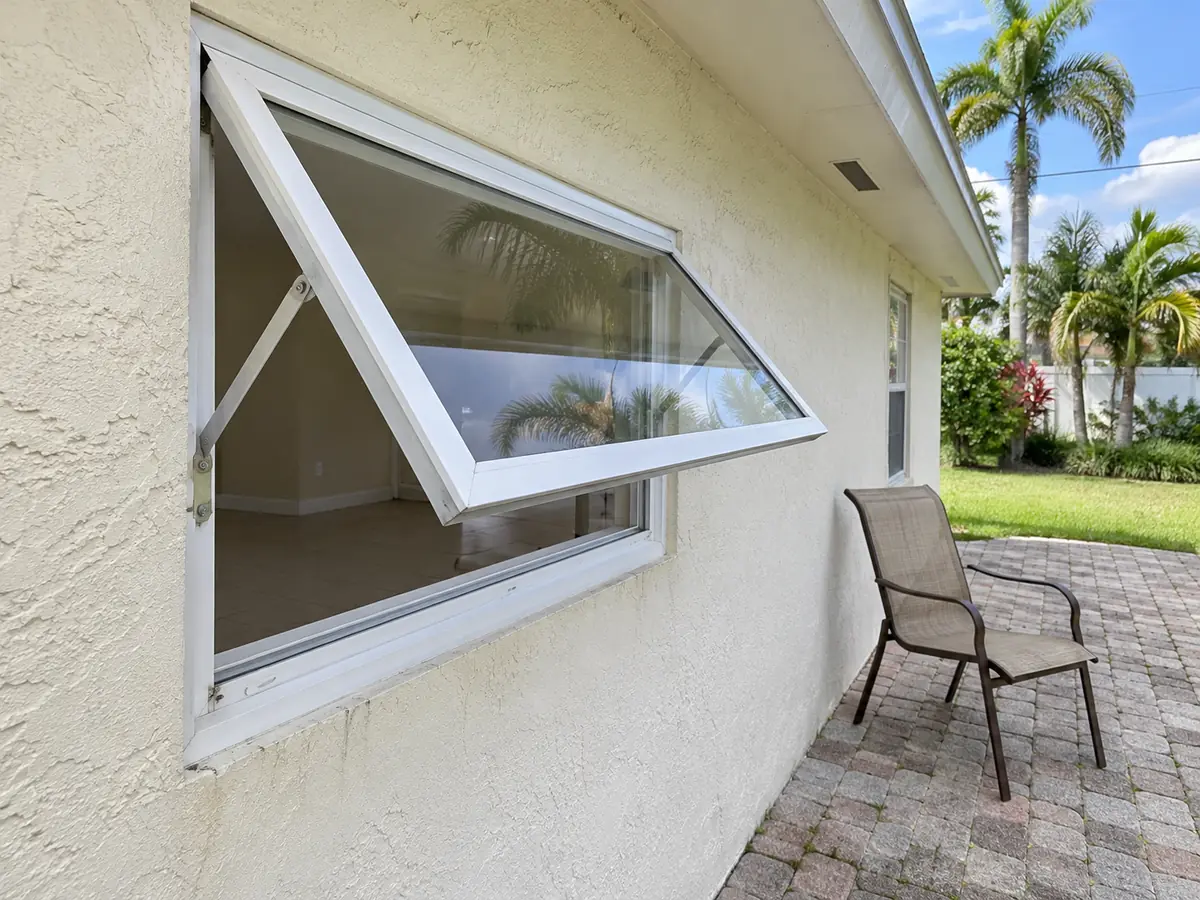
A casement window hinges at the side and swings outward. An awning window hinges at the top, with the bottom swinging outward. Both commonly use an interior crank, although the operating hardware varies by product. Neither needs a sash to slide across another part of the opening.
That movement gives these styles a useful place in a window plan. It also creates an outside clearance requirement that you cannot judge from an interior photograph. Before you choose, we look at the room, the exterior space and how you actually use both.
Casements make ventilation and reach practical
An open casement moves the sash out of the frame opening instead of leaving part of the opening covered by another sash. That can provide a broad ventilation opening, subject to the screen, hardware and any opening limits. Airflow still depends on the breeze and the other openings in your home.
The side-hinged sash can also help catch a breeze from a favorable direction. We consider the hinge side along with nearby walls, landscaping and the usual direction of airflow. A casement facing a narrow, sheltered passage may behave differently from the same style facing an open yard.
Over a kitchen sink, the practical advantage is often the handle. Turning a crank near the bottom of the frame may be easier than leaning across a counter to lift or slide a sash. But a deep counter, tall faucet or crowded windowsill can still make that handle awkward.
Before selecting the window, try the operating motion from where you normally stand. Check whether the handle clears the faucet, whether you can reach the locks and whether a backsplash or countertop edge interferes. An easy-to-turn display window is useful only if the installed controls remain accessible.
Awning windows suit some sheltered openings
An awning sash projects outward from its top hinges, creating a small cover above the opening beneath it. In light rain falling mostly downward, that shape may let you keep some ventilation without immediately wetting the sill. It is a practical feature, not a reason to leave the window open unattended.
South Florida rain often arrives with a changing breeze. Wind-driven water can enter around the sides or underneath an open awning sash. Close the window when rain reaches the opening, when weather turns unsettled or before you leave home. An open impact-rated window does not provide the protection of a closed and properly latched assembly.
Awning windows can make sense in a sheltered opening where you want ventilation without a side-swinging sash. A higher opening may suit the style visually, but the crank and locks still need to be reachable. Do not assume that choosing an awning solves an access problem simply because the sash opens at the bottom.
The compression seal matters when closed
When you close and latch these windows, the hardware draws the sash against weatherstripping around the frame. That compression is what makes a tight seal possible. The sash needs to sit squarely, the weatherstripping needs to be intact and the locks need to engage as designed.
Installation matters here. We check the opening, frame alignment and operation so the sash can close without rubbing or needing unusual force. A handle that becomes difficult to turn deserves attention. Forcing it can strain the operating hardware without addressing the cause.
The seal does not make every casement or awning suitable for every opening. The complete assembly still needs the appropriate approval and rating for its location and configuration. Our article on why windows in the same house need different ratings explains that separate part of the selection process.
Keep projecting sashes out of busy spaces
The biggest drawback is straightforward: the sash occupies space outside your wall. A casement beside a walkway can swing into someone's route. An awning above a patio can project toward someone standing up from a chair. A window that opens comfortably from inside may create an obstacle outside.
We check the full operating movement, not just the position where you expect to leave it. Bring patio furniture, screens and landscaping into that conversation before ordering. These are useful checks to make at each proposed opening:
- Walking routes: Does the sash project into a path, gate approach or frequently used side yard?
- Patio use: Could it interfere with chairs, a dining area or people moving beside the wall?
- Nearby equipment: Are hose reels, shutters, exterior lights or other fixtures in its travel?
- Other openings: Could an adjacent door, gate or window meet the open sash?
- Cleaning access: Can you safely reach the glass and maintain the hardware in the installed location?
If the outside space cannot accommodate that movement, a sliding style may be a better fit. Our comparison of single-hung and horizontal roller windows covers options that operate within the frame.
Choose the style opening by opening
You do not need the same operating style throughout the house. A casement over the sink, an awning in a sheltered opening and a different style beside a busy patio can be a sensible combination. Compare sightlines and frame appearance, but give everyday operation equal attention.
Show us the obstacles before we measure. Leave the faucet, furniture and exterior fixtures in their normal positions. Tell us which windows you regularly open and which handles are difficult to reach. We can compare suitable configurations and check the installation and approval requirements. For a condo, ask your association about appearance and replacement requirements before settling on a style.
Schedule a free in-home estimate or call (954) 637-7029 so we can check reach, clearance and suitable options at your home.