Which French door should open first?
French doors can look balanced from the patio but feel awkward from your dining room. Before we order, we help you choose the everyday opening panel around the way you actually move through your home.
By the USA Windows & Doors team · · 4 min read

Choose the everyday doorway, not just the view
If you are moving chairs to reach your patio during a holiday gathering, pay attention to which French door you use. That small frustration is worth discussing before you replace the doors. A matching pair of glass panels does not tell you whether the everyday route through them suits your room.
Start by showing us where you walk with groceries, a serving tray or a laundry basket. Then show us where you stand while opening and closing the door. We need to understand that movement with your furniture in its normal position, not pushed aside for the appointment.
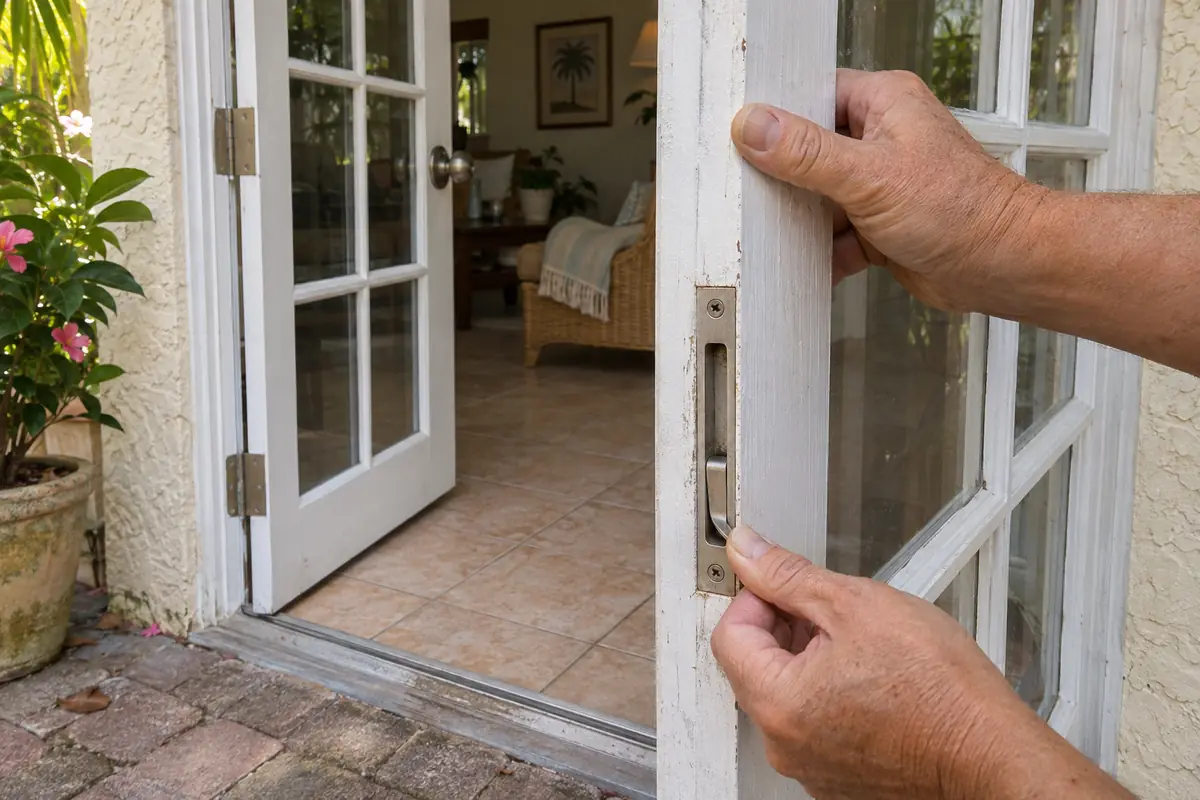
In a paired French door arrangement, the active panel is the door you normally open for everyday passage. The other panel is often called the inactive panel. Depending on the selected assembly, that panel may also open after its retaining hardware is released. Do not assume that every paired design operates the same way.
The useful question is simple: can you comfortably reach, open, pass through and close the everyday door without rearranging the room?
Walk the route with your furniture in place
We often see patio openings beside dining tables, kitchen counters and deep outdoor seating. The glass looks spacious, but the usable walking path may sit along an edge of the opening. Choosing the active panel on the opposite side can send you around furniture every time you step outside.
Walk from the room you use most to the spot you normally visit outdoors. That might be a covered dining area, a garden gate or the place you set down a tray. Notice whether your natural route approaches the left or right side of the doorway.
Then check the approach from outside. A panel that feels convenient from the kitchen may put you behind a patio chair when you return. Leave your outdoor furniture where it normally belongs while we assess the opening.
- Pull dining chairs out as though someone is sitting at the table.
- Leave the sideboard, plant pots and patio seating in their usual positions.
- Check whether an open cabinet or nearby door crosses your route.
- Think about carrying something through without turning sideways around furniture.
If the current arrangement is awkward, tell us what you want to change. Do not assume the existing active panel is the right choice simply because it has always been there.
Separate the active panel from the swing direction
Choosing which panel opens for daily use is not the same decision as choosing where that panel swings. We discuss them together because the panel and its travel need to fit the same space.
For an inward-opening layout, look at the room behind the door. A nearby table, curtain or cabinet can interfere with its movement. For an outward-opening layout, look at the patio landing, seating and approach to the handle. Neither arrangement should be chosen from a photograph alone.
In South Florida, a covered patio can function like another living room. Outdoor chairs and planters deserve the same attention as indoor furniture. Blue sky beyond the glass does not mean the space immediately outside the door is empty.
A nearby screen also needs a separate conversation. Ask how it operates, where it rests when open and whether it interferes with the route you want. Do not assume your existing screen arrangement transfers to the replacement.
During the visit, we can walk through the proposed movement with you. Keep the distinction clear: which panel you use and where it swings both belong in the order review.
Decide how you expect the other panel to work
You may use the everyday panel for patio access but want the wider opening when moving furniture or hosting guests. Explain that before selecting the assembly. A door that looks like a matching partner may not provide the operation you expect.
Ask us to explain the proposed inactive panel in plain English. Does it open? What must you release? Where is that hardware? Is there a closing sequence? Have us demonstrate the intended operation rather than relying on a description such as double doors.
Also consider who normally uses the opening. Someone who rarely opens the second panel may not remember its sequence. Someone carrying a tray needs a convenient everyday route, not a plan that depends on opening the whole assembly.
Our impact doors page is a starting point for comparing door arrangements. At your home, we narrow the choice around the opening and the operation you actually need.
Confirm the layout before we place the order
Do not approve the configuration based only on the words left or right. Those words can become confusing when people are standing on opposite sides of the glass. Ask us to identify the viewing side and show the proposed active panel and swing on a drawing.
Your preferred layout also needs to work within the selected impact-rated assembly and the requirements for your opening. Our article on why openings in the same house need different ratings explains why location matters when we evaluate a replacement.
We handle permits, engineering and inspections, and our own crews perform the installation. If you own a condo, ask your association about its approval process before the order is finalized. Check with your building department about questions specific to your opening.
Before you sign off, confirm the everyday panel, swing direction, operation of the other panel and any screen arrangement together. Keep that drawing with your project paperwork. Treat a later request to reverse the operation as a design question for us to review, not a simple adjustment to assume is possible.
Show us your everyday patio route during a free in-home estimate. Call (954) 637-7029 to arrange a visit.