Keep your sliding door drainage paths clear
Water in an exterior sliding door track does not always mean the door is leaking. We explain how drainage openings work, what to leave alone, and which signs deserve a closer look.
By the USA Windows & Doors team · · 5 min read

Your sliding door sill has a drainage job
Before you open the patio doors for holiday visitors, look down at the track. Sand, pet hair, fallen leaves and debris from patio cleaning can collect where the panels slide. On a South Florida home, that buildup deserves attention even when the door still moves easily.
A sliding impact door sill does more than support the panels. Depending on the design, it also collects rainwater that reaches the exterior track and directs it outside through drainage passages. The visible exits are often called weep openings.
Some water in an exterior collection channel during rain can be part of that design. Water crossing onto your interior floor is a different concern. The useful question is not simply whether the track gets wet, but where the water collects and whether it has an unobstructed path outside.
We start by identifying the door assembly and its intended drainage layout. Track shapes differ, and a channel that looks empty may contain drainage details you cannot see from above.
Find the exits before you clean
Look along the outside bottom of the frame from a safely accessible patio or balcony. You may see slots, small covers or other drainage outlets. Their appearance and location depend on the door. Do not assume every opening in the frame is a missing plug.
Some outlets have covers or baffles that belong there. Leave those parts in place unless the product's care instructions specifically describe removing them for cleaning. If you cannot identify an opening, photograph it and ask your installer before changing it.
We often see the surrounding patio treated as a separate cleaning task. In practice, sweeping sand toward the threshold or washing loose dirt against it can load the door's drainage area with debris.
- Look for leaves and grit resting against the exterior sill.
- Check whether a welcome mat or outdoor rug covers an outlet.
- Notice paint, sealant or patio coating across a visible drainage opening.
- Keep planters and stored items from blocking access to the bottom of the frame.
For a condo, stay within your safely accessible balcony area. Ask your association about exterior access or work that involves shared building surfaces.
Remove loose debris without forcing anything
Choose dry weather and open the panel only as you normally would. Start with a vacuum and a soft brush attachment to lift loose material from accessible track surfaces. A soft hand brush can help gather grit without scraping the frame finish.
Follow with a damp, soft cloth where the care instructions allow it. Use an approved mild cleaner if needed. Work gently around weatherstripping, corners and drainage covers, and remove loosened debris instead of pushing it into a slot.
Cleaning is not a reason to take the door apart. Do not lift out a heavy glass panel, loosen frame fasteners or remove unfamiliar sill pieces to reach hidden passages. Those areas need someone familiar with the assembly.
Avoid pressure washing the track or aiming a strong hose stream into the frame. That can force water into places ordinary cleaning should not reach. Do not use a drill, knife or stiff wire to enlarge an outlet or probe an unseen passage.
Lubrication is a separate task. Do not coat the sill with oil to make it look clean or help water move. Follow the door's instructions for any permitted lubricant and its application points.
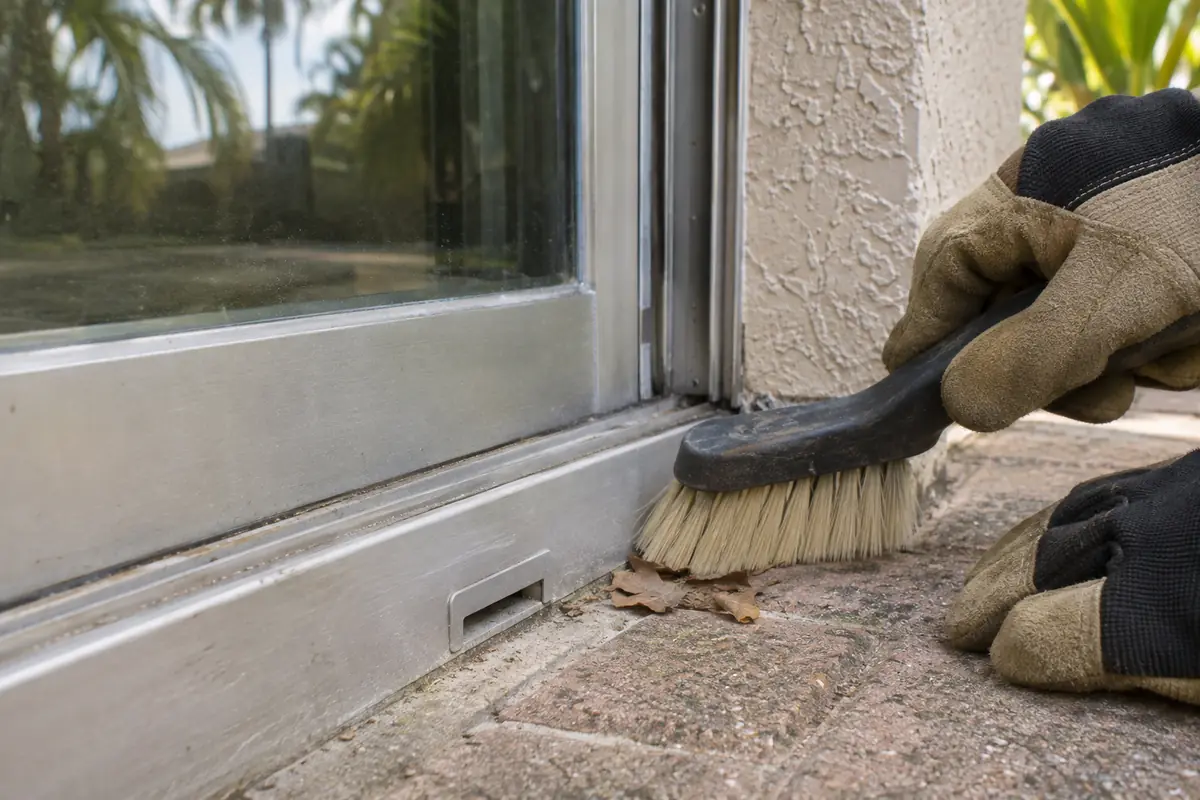
Leave drainage openings open
A slot at the bottom of a frame can look like an unfinished gap, particularly when you are touching up paint or preparing the patio for guests. Filling it with caulk can interrupt the drainage path.
Do not seal a visible opening simply because rainwater comes out of it. That discharge may be the opening doing its intended job. Likewise, do not remove a cover because you think a larger opening would drain better.
Drainage outlets and perimeter installation joints serve different purposes. A joint around the frame may need sealant, while a nearby outlet must remain open. We identify the approved installation details before recommending where sealant belongs.
If someone is painting the exterior, refinishing the patio or working around the threshold, point out the drainage outlets beforehand. Afterward, check for coating buildup or debris without scraping into the frame. Ask the contractor to address anything that appears obstructed.
Separate routine dirt from a water problem
After cleaning accessible surfaces, observe the door during ordinary rain from inside. Keep the panels closed and latched. Note where water first appears, whether it stays in an exterior collection channel, and whether it reaches the room-side edge.
Do not deliberately flood the sill to test it. If a drainage check requires adding water, have an installer explain the procedure for your particular door. An improvised hose test can create misleading results.
Arrange an evaluation if you notice:
- Water crossing onto the interior flooring.
- Water remaining trapped after surrounding surfaces have dried.
- Dampness appearing beside the frame rather than in the track.
- A damaged drainage cover or an outlet covered by hardened material.
- Recurring water despite removing accessible loose debris.
Photographs taken before you wipe up can help show the water's path. A clean track alone does not rule out a problem with panel alignment, seals, installation joints or the surrounding opening.
Decide what needs attention next
A dirty sill does not automatically mean you need a replacement door. Start with appropriate cleaning and identification of the drainage layout. Persistent indoor water needs a closer assessment, not another layer of caulk across the bottom.
If replacement becomes part of the discussion, we look at the opening, threshold and surrounding finishes alongside your choice of impact doors. Drainage needs to be considered as part of the installed assembly, not as an afterthought.
For help planning a sliding impact door replacement, request a free in-home estimate or call (954) 637-7029.