What an emergency roof tarp actually does
A roof tarp can help keep more rain out while you arrange permanent repairs. We explain what temporary dry-in means, how securing methods differ by roof, and why a quiet ceiling does not mean the problem is fixed.
By the USA Roofing team · · 5 min read

A tarp buys time, not a repaired roof
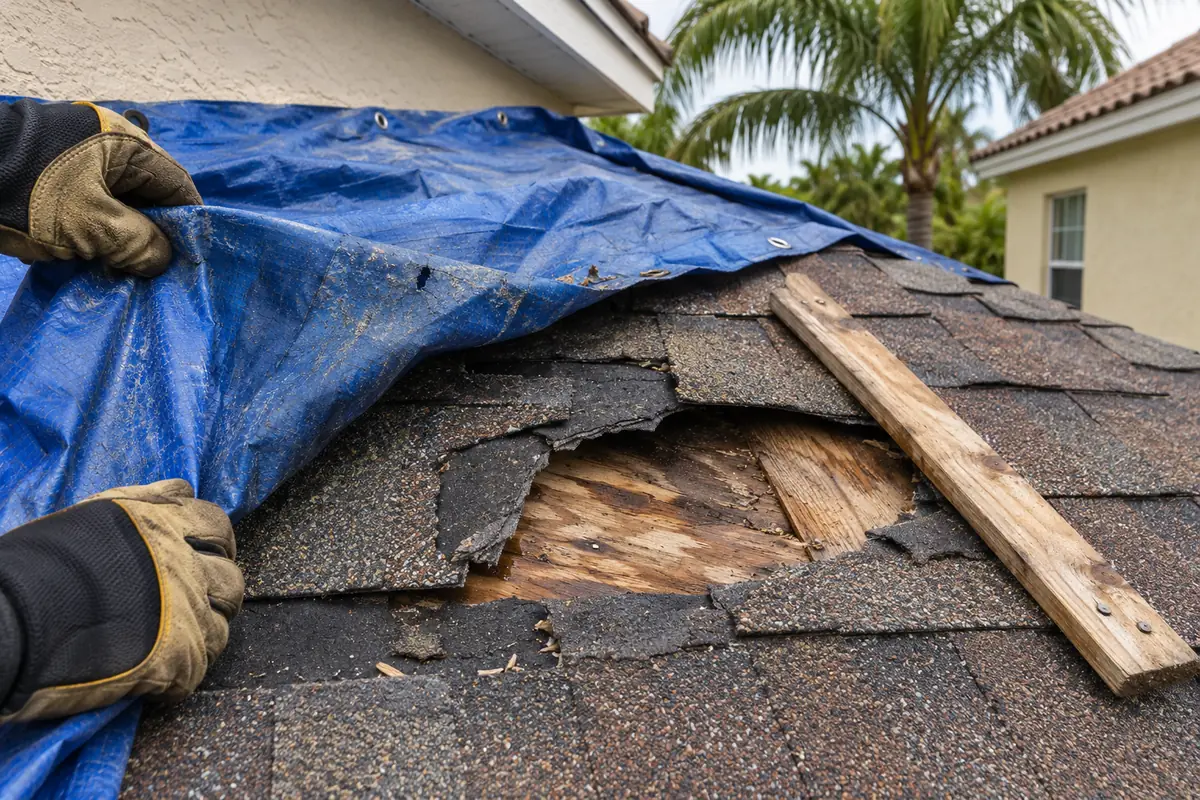
An emergency roof tarp covers a damaged area to help shed rain until permanent work can happen. Roofers call this temporary dry-in. The aim is to reduce additional water entry, not to restore the roof beneath the covering.
On South Florida homes, the next afternoon shower can arrive before repair materials or crews are available. A properly installed temporary covering can help bridge that gap. But the word temporary matters: installing a tarp should start the repair process, not put it on hold.
A tarp does not replace damaged shingles, tile underlayment, metal flashing or a flat roof membrane. It does not strengthen weakened decking or framing. It also does not dry insulation or ceiling materials that are already wet.
Even if the dripping stops, the underlying damage still needs attention. We need to identify where water entered, assess the materials beneath that area and plan a repair that addresses the cause.
Securing matters as much as covering
A tarp needs more than enough material to hide the visible damage. Its placement must account for water flowing from higher parts of the roof, nearby penetrations and the condition of the surface beneath it. Water can enter above a ceiling stain and travel before appearing indoors.
On a sloped roof, the upper edge needs a detail that keeps runoff from simply flowing underneath. Depending on the roof layout, that may involve carrying the covering over the ridge. The sides and lower edge also need attention so wind cannot easily lift the sheet or turn loose material into a flap.
Professional installations may use wood battens, which are strips that distribute the holding force along the tarp, with attachments selected for the roof and sound supporting material. A few fasteners through exposed grommets are not a substitute for a secure attachment plan. Any holes made during temporary work also need to be addressed during the permanent repair.
Ask the installer to explain:
- How the covering extends beyond the damaged area.
- How the upper edge sheds water.
- How the covering is secured without relying on loose or damaged materials.
- Whether temporary attachments create penetrations that need later repair.
- Who to call if the tarp shifts, tears or starts leaking.
This is not a roof-climbing project for the homeowner. A wet or damaged roof can be unsafe even when the affected area looks small. Our article on checking your roof after a hurricane safely covers observations you can make without getting onto the roof.
The roof type changes the approach
On a tile roof, the visible broken tile may not show the full extent of the problem. The underlayment beneath it is part of the water-shedding system. Securing a tarp requires care around brittle tile, and fastening indiscriminately through the covering can create additional damage.
On a shingle roof, the installer needs to consider exposed decking, loose surrounding shingles and how runoff reaches the opening. Covering only the bare spot may leave an entry route above it.
On a metal roof, seams, panel profiles and flashing affect how temporary protection can be attached. Making unnecessary holes in sound panels creates repair work that did not exist before the tarp arrived.
Flat roofs need a different assessment. A loose sheet can trap water or obstruct a drain instead of directing water away. Depending on the membrane and damage, a roofer may recommend a compatible temporary patch rather than a conventional tarp. The right emergency measure depends on the roof, not just the size of the leak.
Keep the temporary period short
There is no dependable calendar deadline that makes every tarp safe to leave in place. Material, attachment, exposure, roof shape and changing weather all affect its condition. South Florida sun can weaken exposed plastic, while wind can loosen edges and abrasion can wear holes where the covering rubs against the roof.
Arrange the permanent assessment when the tarp is installed. Do not wait for it to leak again before getting the repair moving. Ask for a written description of the temporary work, the next repair step and a plan for checking the covering if scheduling is delayed.
From the ground, watch for lifted edges, flapping, tears or a sagging pocket of water. Indoors, note new stains or returning drips. Contact the installer if anything changes, especially after another spell of wind or rain. Do not climb up to tighten the covering yourself.
A dry ceiling after a shower is useful information, but it is not proof that every entry point is sealed or that concealed materials have dried.
Act promptly and keep a clear record
More rain through an existing opening can wet additional decking, insulation, ceilings and finishes. That is why arranging temporary protection promptly matters, once conditions allow a crew to work safely. Waiting for the permanent repair appointment does not prevent fresh water from entering in the meantime.
Photograph visible damage from a safe location before temporary work, if you can do so without delaying needed protection. Ask the roofer for photographs of the roof before and after covering it. Save the work description, invoices, receipts and communications together.
Check your own policy with your insurance agent. Ask what it says about emergency protection, reporting damage, documentation and any required inspection before permanent repairs. Also ask how temporary work is handled under your policy. Do not assume a tarp installation or a contractor's opinion establishes coverage or reimbursement.
If you own a condo, ask your association who coordinates roof access, emergency work and the permanent repair. Make that contact promptly rather than assuming someone else has already reported the leak.
Plan what happens when the tarp comes off
The permanent scope should address the original damage and any temporary attachment points. It may involve a localized repair or broader work, depending on what the inspection finds. Ask what needs to be opened, what materials need replacement and how the finished area connects to the surrounding roof.
We handle roof permits, engineering and inspections as the work requires. For questions about local requirements, check with your building department. Temporary covering is not a substitute for that process.
Contact us for a free roof estimate or call (954) 637-7029 to discuss your roof and the next step.