Why rust spots appear on metal roofs
Orange specks on a metal roof do not always mean the panels are rusting. We explain how leftover metal shavings, damaged finishes and nearby hardware leave different clues, and what to do before anyone scrubs or paints.
By the USA Roofing team · · 4 min read

A rust-colored mark is a clue, not a diagnosis
Orange spots on a painted metal roof deserve a closer look, but they do not automatically mean the roof panels are rusting through. The color may come from loose steel particles sitting on the finish, a nearby piece of hardware or exposed metal where the protective surface has been damaged.
We start by asking where the marks appeared and what work happened nearby. A new scatter of tiny spots after cutting or drilling suggests a different investigation from a stain that keeps returning beneath a mounting bracket.
On South Florida homes, we also consider salt exposure, damp debris and areas sheltered from washing rain. Those conditions matter, but blaming every orange mark on coastal air can miss a specific, repairable source.
The useful question is whether something is staining the panel or the panel itself is deteriorating. A photograph from the driveway usually cannot settle that distinction.
Loose metal shavings can leave scattered specks
Cutting and drilling metal can leave tiny fragments called swarf. Steel fragments left on a roof can rust and stain the surface beneath them. The roof panel does not have to be made of steel for rusty debris to leave a mark.
These particles may remain after roofing work or land on the roof during another project. We ask about recent work involving metal trim, rooftop equipment or nearby cutting. That history helps us decide where to inspect, without assuming who caused the problem.
Scattered orange freckles around a work area can suggest loose fragments. A closer examination still matters: particles may be resting on an intact finish, embedded in it or lying beside scratches. Those are not interchangeable conditions.
Do not test the spots with steel wool or a wire brush. Abrasive tools can scratch the finish and introduce more metal particles. Ask for an inspection and a cleaning method suited to the actual panel finish rather than trying a household rust remover.
Follow a streak back to its source
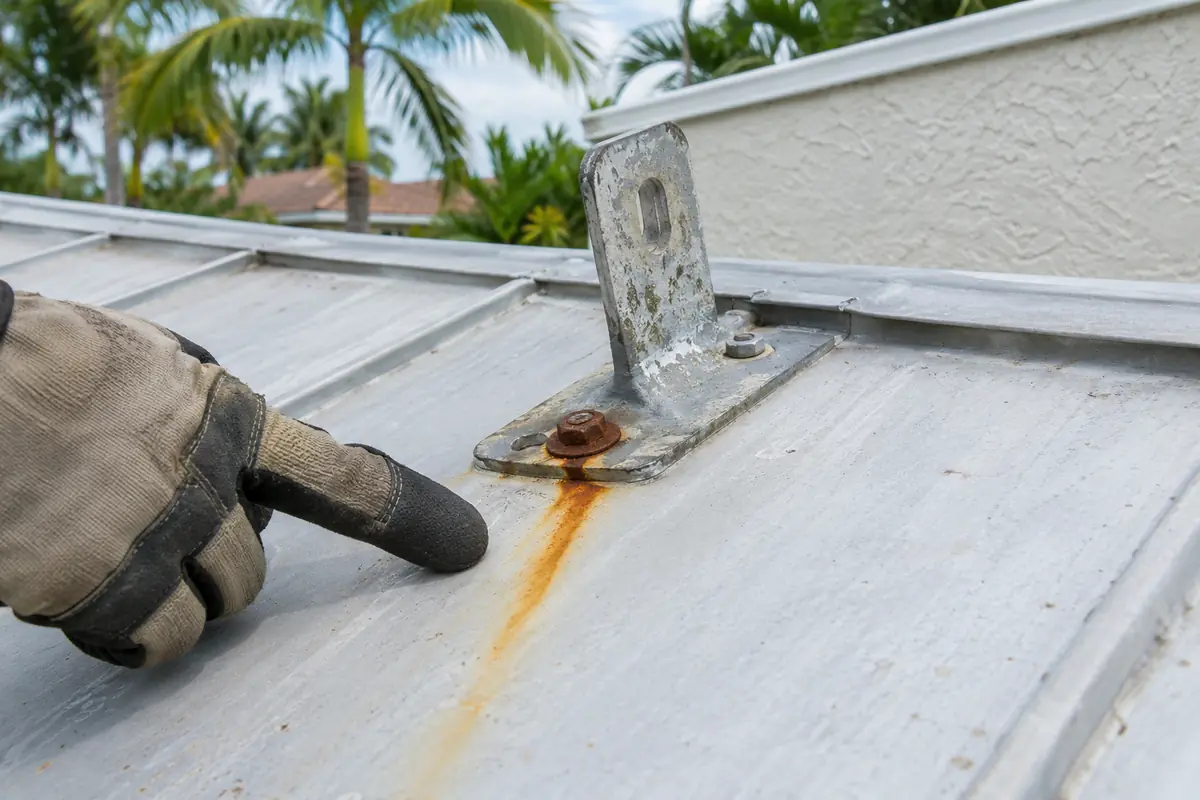
A narrow orange trail may begin above the place where you first notice it. Rain can carry staining from a rusting screw, bracket or other component onto an otherwise sound panel. Cleaning the trail without addressing that source may leave you with the same mark again.
We check the hardware, the surrounding finish and the route water takes below it. We also look for leaves or debris holding moisture against the roof, especially around attachments and sheltered edges.
Different metals deserve attention where they meet. Some combinations can accelerate corrosion when moisture is present. The concern depends on the materials and assembly, not simply on whether the metals look different.
That is why replacing a rusty fastener with a random screw is not a sound repair plan. The replacement needs to suit the roof system, its attachment requirements and the surrounding materials.
Check the protective finish before choosing a repair
A surface stain and a damaged protective finish may look similar from below. We look for scratches exposing metal, peeling or lifted coating, pitting and deterioration around edges or attachments. We also check whether the affected area is isolated or continues into a seam where it is harder to examine.
Painted steel and painted aluminum panels do not deteriorate in exactly the same way. Identifying the panel material and finish helps us interpret what we see. Keep your roofing paperwork if you have it, including the product information and records of previous repairs.
Depending on the findings, the next step may be careful debris removal, finish-compatible cleaning, replacement of an unsuitable component or a specified finish repair. More extensive damage may require replacing an affected roofing component.
Painting over orange marks is not a diagnosis. It can conceal the evidence without removing the source or correcting the underlying damage.
Gather useful information without climbing onto the roof
Metal roofing can be slippery, and walking on it can damage panels or details if you step in the wrong place. You do not need roof access to give us a useful starting point.
- Photograph the affected roof area from a safe ground-level position, including a wider view that shows its location.
- Note whether the marks are scattered specks, a continuous streak or a patch near an attachment.
- Tell us about recent roofing, gutter or rooftop equipment work.
- Gather panel information, installation paperwork and any previous cleaning or repair records.
- Mention indoor staining or active dripping separately, rather than assuming the orange marks explain it.
If you own a condo, ask your association who should arrange roof access and review the maintenance records. Avoid sending someone onto a shared roof just to obtain a closer photograph.
A pause between rainy spells is a useful opportunity to arrange an inspection. Dry weather does not establish that the stained area is sound, and a rust-colored mark alone does not establish that you have a leak.
Ask for a source-based repair plan
Before authorizing work, ask what is producing the stain, whether the panel finish is intact and how the proposed repair addresses the source. Ask for photographs that distinguish loose debris, damaged hardware and deterioration of the panel itself.
If cleaning is recommended, the plan should identify a method compatible with the finish. If component replacement is recommended, ask how the replacement suits the existing roof. A broad coating proposal should not substitute for explaining a localized problem.
We can evaluate the affected area and explain whether the findings support maintenance, a targeted repair or a broader review of your metal roof. Our own crews perform the roofing work, and we handle permits, engineering and inspections when the scope requires them.
Start with a free roof estimate or call (954) 637-7029 to arrange a review of the spots and their likely source.