Can you coat over flat roof blisters?
A raised bubble does not tell you which roof layer has separated or whether moisture is trapped below. We explain why we inspect blisters before recommending another coating on a South Florida flat roof.
By the USA Roofing team · · 4 min read

A bubble is a symptom, not a diagnosis
If you notice raised bubbles on your flat roof, do not assume another coat of white material is the answer. A coating can cover the shape without correcting what caused it. Before we recommend recoating, we need to identify which layer has lifted and whether the roof underneath is sound and dry.
On South Florida homes, a flat roof may cover a porch, an addition or the main living area. Similar-looking white surfaces can cover different roofing systems. The visible finish alone does not tell you what is underneath or which repair materials belong there.
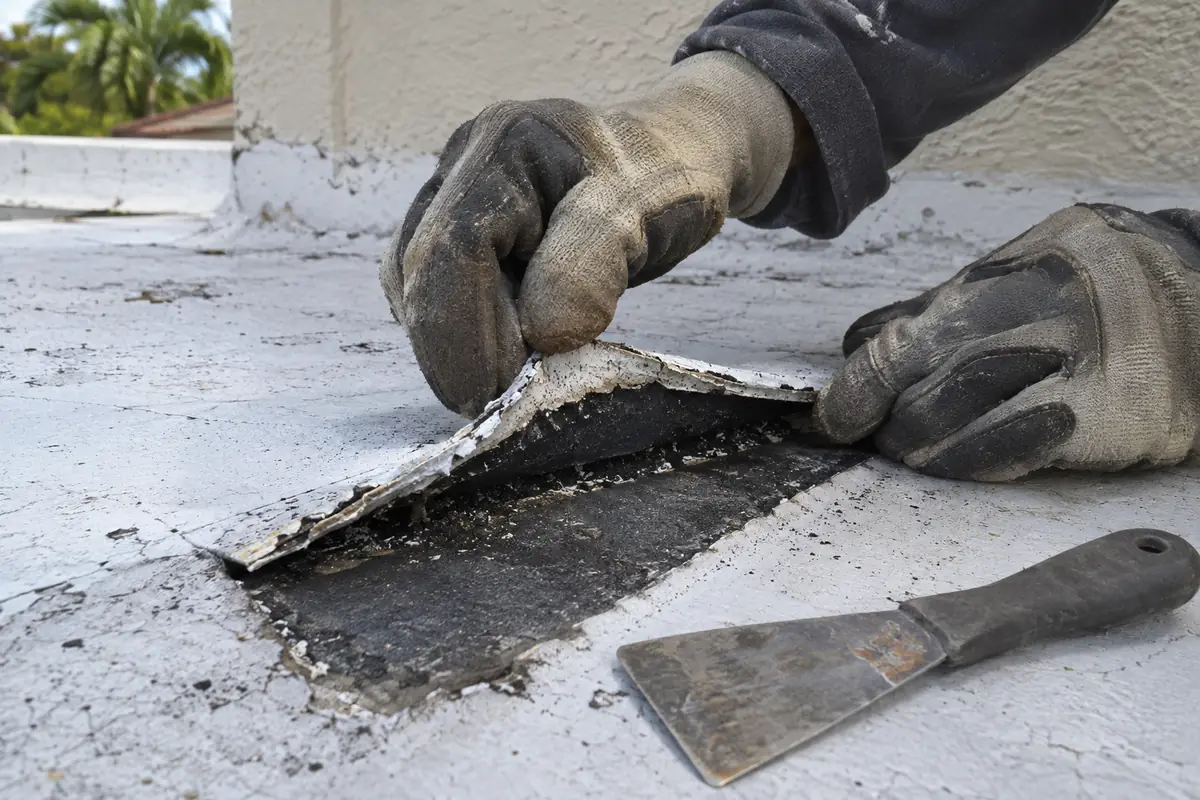
A bubble might be loose coating lifting away from the roof membrane, the continuous layer that keeps rain out. It might instead involve separation within the roofing layers themselves. Those conditions need different decisions. A fresh-looking surface is not evidence that the layers below are in good condition.
As you plan maintenance after the wet season, ask for an assessment of the existing roof before agreeing to a coating proposal. The useful question is not simply whether the roof can be painted white again. It is whether the existing assembly is suitable to receive the proposed system.
What can make the layers separate
Blisters can develop where air or moisture becomes trapped between layers. Sunlight heats the roof, and the trapped pocket can expand. That process can lift a coating or separate bonded layers. A blister does not, by itself, prove that rainwater entered through a hole.
Surface preparation also matters. Dirt, dampness, a weak existing finish or incompatible materials can interfere with adhesion. If a coating never bonded properly, adding material over it leaves the weak layer underneath. The new work depends on a surface that is already pulling away.
We also look at previous patches. A roof with overlapping repair materials may have different conditions from one area to the next. A sound patch beside peeling coating does not establish that the whole surface is ready for another application.
Standing water is a separate concern that can exist alongside blistering. If recurring puddles are your main issue, our guide to water collecting on a flat roof explains the drainage questions. Here, the decision centers on separated layers and whether coating over the existing surface makes sense.
What we check before recommending coating
We start by identifying the roof covering and any existing coating. Old proposals, repair records and installation photographs can help. If you do not have those records, tell us what work you remember rather than guessing the material.
During the roof assessment, we examine the blisters, nearby seams, patches and transitions. We look for cracking, open edges and loose material. The location matters too: a raised area beside a seam or in a maintenance access path deserves attention because it may be more vulnerable to opening or damage.
- Which layer is loose? Surface coating failure is not the same as separation deeper in the roof.
- Is moisture present below? A dry surface does not establish that concealed materials are dry.
- Is the surrounding roof sound? A repair needs suitable material around it, not another weak edge.
- Can the proposed coating bond? Compatibility and preparation need to be established before application.
Depending on the roof, investigating concealed moisture may involve a moisture survey and carefully selected test openings. A scan needs interpretation and may need confirmation. If an opening is necessary, we explain how it is being used and how it is being closed. We do not ask you to puncture a blister yourself.
Repair, monitor or replace before recoating
An intact blister does not automatically mean the whole roof needs replacement. On some roofing systems, an isolated, stable blister may be documented and monitored rather than cut open immediately. That is a roof-specific judgment, not permission to ignore every raised area.
A cracked blister, an opening at its edge or separation affecting a seam changes the assessment. Repairs may require removing loose material and rebuilding the affected area with compatible roofing materials. The repair method depends on which layers are involved and what we find beneath them.
If moisture has damaged underlying materials, simply letting the top surface dry is not enough. The affected materials need to be addressed. Where separation or deterioration extends beyond a practical repair area, reroofing may be more appropriate than coating.
Coating becomes a reasonable option only after we establish that the roof is suitable, complete the necessary repairs and prepare the surface for the selected system. Ask the proposal to distinguish repair work from coating work. Also ask what happens if preparation exposes additional loose material or concealed damage.
What you should do before the visit
Do not climb onto the roof to press, cut or flatten a bubble. An intact raised area can be damaged by foot traffic or a tool. Avoid applying household sealant or an unidentified roof patch, which can complicate material compatibility and the later assessment.
Gather photographs already available from a safe location, previous roofing paperwork and notes about interior staining. Tell us whether the raised areas appeared after recent coating work or were visible beforehand. If a ceiling is actively leaking, report that when scheduling rather than treating the visit as routine surface maintenance.
For a condo or association-managed property, ask your association who coordinates roof access and maintenance approval. If the proposed scope changes from coating to roofing repairs or replacement, check with your building department about permit requirements. We handle permits, engineering and inspections for our roofing projects as required by the scope.
Schedule a free roof estimate or call (954) 637-7029 so we can assess the blisters before recommending coating or other roof work.