Checking windows and doors after a storm
Glass can crack and remain in place, while frame damage can be less obvious. We explain what to document after a storm, which problems need prompt attention and how we assess repair or replacement.
By the USA Windows & Doors team · · 5 min read

Start with a look, not an operating test
After a storm, a window can look closed and still need attention. A sliding door may have sand packed into its track. An entry door may latch differently. Start by looking at each opening once conditions are safe, before trying to move anything.
Walk through your home from inside. Look at the glass, frame corners, surrounding wall and floor. Outside, inspect only what you can see safely from ground level. Do not lean out of a condo window or climb to reach exterior damage.
Leave damaged openings alone. Do not push on cracked glass, pull at loose trim or force a door that has started dragging. Keep people and pets away from loose glass or a panel that appears unstable.
Arrange prompt professional attention if glass is missing, a frame has pulled away from the wall, a door cannot latch, or water continues entering. A damaged garage door that hangs crooked or has displaced tracks should stay out of use. Do not adjust its springs, cables or track hardware yourself.
Photograph the opening before cleaning
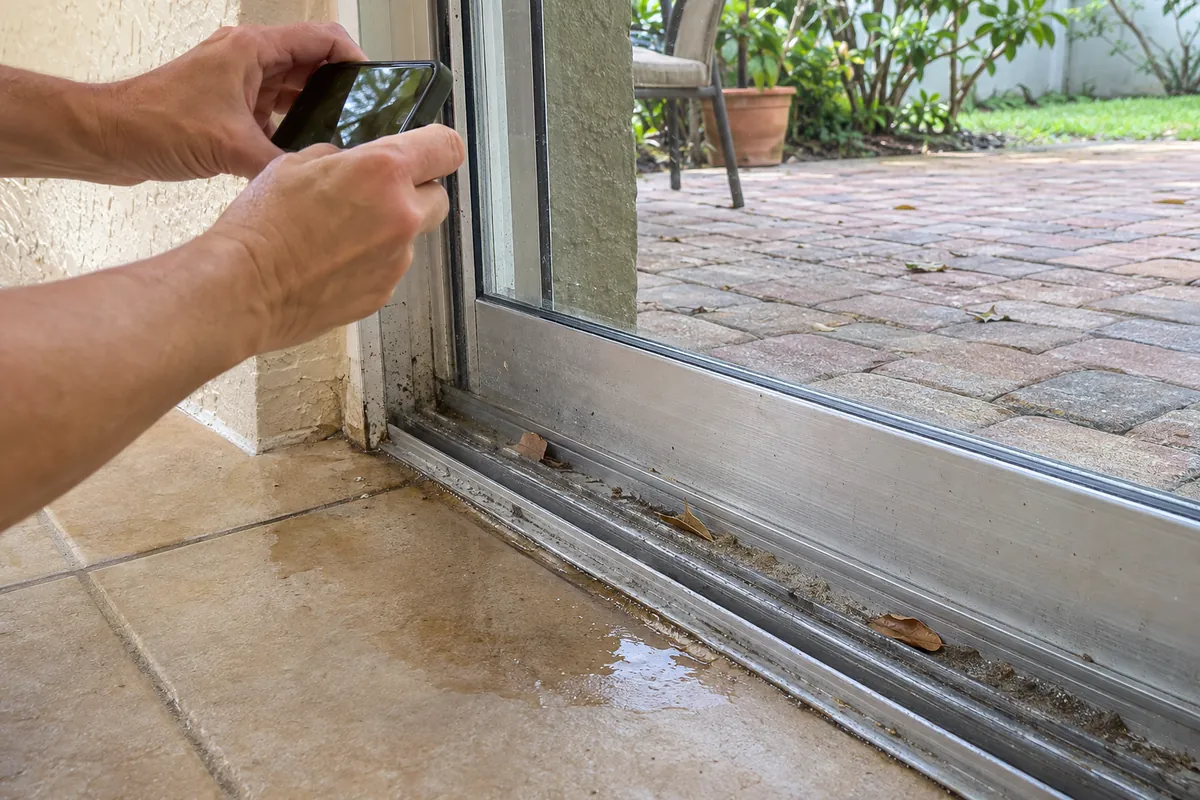
Take photographs before wiping the sill or removing loose debris, provided you can do so safely. A close view of a crack helps, but it does not show where that crack sits within the opening. Capture the surrounding area too.
- Photograph the entire window or door from inside, including the adjacent wall and floor.
- Take closer views of cracked glass, separated corners, bent metal, loose hardware and gaps around the frame.
- Record water where you find it: in the track, on the interior sill, beneath trim or across the floor.
- Photograph leaves, sand and other debris before removing anything safely accessible.
- Capture existing product labels if visible without opening, lifting or dismantling a damaged unit.
Label your photographs by room and opening. Add a short note about what changed, such as a handle that no longer engages or water noticed beneath a fixed panel. Do not recreate a leak with a hose or repeatedly operate a damaged door for a video.
Keep your photographs with installation records, approvals and previous repair paperwork. Ask your insurance agent about documentation for your policy. For a condo, notify your association and ask about access and approval requirements before arranging exterior work.
Cracked glass that held still needs assessment
A cracked outer pane can remain in place after an impact. Impact glass is laminated: two panes of glass bonded to a clear interlayer. When it breaks, the pieces stay attached to the interlayer and the opening stays closed. That describes how laminated glass is designed to behave, not a reason to leave damaged glass in service.
You cannot confirm the condition of the entire assembly from the crack alone. The glass edge, glazing materials, frame and attachments also matter. Do not assume an opening is ready for another storm because the broken pieces stayed together.
Contact us promptly about cracked glass, even when there is no visible hole. Explain whether anything struck it and whether you have noticed movement, water or a change in how the opening closes. We assess those details together.
Do not press on the pane, pick away fragments or attempt to repair the crack with sealant. If temporary protection is needed, have a qualified contractor determine how to secure the opening without placing additional stress on damaged glass or framing.
Look for bent frames and changed alignment
A bent frame is not just a cosmetic problem. Look for bowed sections, separated joints and new gaps between the frame and surrounding finish. Cracks in stucco beside an opening deserve photographs, but they do not establish the cause by themselves.
For an opening with no visible damage, gently check normal operation. Stop if it binds, scrapes or needs extra force. A window sash that sits unevenly, a sliding panel that rubs or French doors that no longer meet evenly need closer inspection.
Check whether locks engage normally without pulling or lifting the panel into position. A lock that catches only when you force the door can point to an alignment problem. Tightening a screw or moving the latch may conceal the symptom without addressing what moved.
We check the frame, moving panel, hardware and connection to the opening together. If a frame appears loose, do not test it by shaking it. Photograph the visible gap and leave the assembly undisturbed.
Separate track debris from water problems
We often see leaves and grit collect at sliding door thresholds in South Florida. Photograph that buildup first. If the glass and frame appear undamaged, remove loose debris with a soft brush or vacuum, following the product's care instructions. Keep tools away from glass edges and seals.
Do not drill drainage holes or cover existing drainage openings with caulk. Do not use a pressure washer to clear a track. If you cannot identify the drainage path, leave it for inspection.
Water in an exterior track is different from water crossing onto your interior floor. Some assemblies collect and drain water through designated channels. An interior puddle, wet wall finish or recurring damp sill needs investigation rather than an assumption that the window failed.
After documenting it, dry accessible interior surfaces when safe. Note where the wet area begins. Water may be entering around the opening rather than through the glass assembly itself. Ask for the source to be identified before accepting a bead of caulk as the repair.
Decide between glass replacement and a new unit
Cracked glass does not automatically require replacing the entire window or door. Glass replacement may be appropriate when the frame, panel, glazing supports and attachments remain suitable, and a compatible replacement is available for the approved assembly.
A complete unit may need replacement when framing is distorted, joints or attachment points are damaged, or a suitable glass repair cannot be completed. Hardware or drainage repairs may address other problems, but they are not substitutes for replacing damaged glass or structural components.
We explain what we found and what the proposed work includes. For replacement work, we handle permits, engineering and inspections as needed, with our own crews doing the installation. Check with your building department about requirements for your opening, and ask your association about its review process.
Schedule a free in-home estimate to review your damaged windows or doors, or call (954) 637-7029.