The test every impact window has to pass
The lumber strike gets your attention, but an impact window also has to withstand repeated pressure afterward. We explain what those tests show and how to connect the results to the windows installed in your home.
By the USA Windows & Doors team · · 5 min read

The lumber strike is only the beginning
A piece of lumber hits the glass. The glass cracks, but it remains in the frame. That is the part of an impact window test you may have seen in a video. What happens afterward matters just as much: the damaged assembly must also face repeated pressure loading.
For a South Florida homeowner, the useful question is not simply whether the glass survived a hit. It is whether the complete window system passed the applicable impact and pressure tests, and whether its approval covers your particular opening.
These are controlled tests on representative window assemblies. Nobody fires lumber at the windows installed in your house. We use the resulting product approvals and installation requirements to select a suitable assembly and attach it correctly to your home.
What the large-missile test does
In the large-missile impact test, a launcher fires a 9-pound 2x4 at the glass at 50 feet per second. Here, missile simply means the object launched at the window. The lumber represents a substantial piece of wind-borne debris.
The test follows prescribed impact locations rather than letting the tester choose whichever spot looks strongest. This makes the result a controlled evaluation, not a demonstration with a convenient target.
The specimen includes the glass, the frame and the attachment system. That distinction matters. A pane does not protect an opening by itself. The parts holding it, and the connections securing the assembly, also have to perform under the test conditions.
Cracking does not automatically mean the window failed. Impact glass is laminated, with two panes bonded to a clear interlayer. That interlayer is designed to retain broken pieces and help keep the opening closed. Our article on what is actually inside impact glass explains that construction in more detail.
For this test, the important distinction is between damaged glass and a failed protective assembly. The evaluation looks beyond the appearance of the cracks to whether the system meets the prescribed acceptance criteria.
Why pressure cycling follows the impact
After the impact stage, the assembly faces repeated pressure cycles. Test equipment applies pressure that loads the window inward and outward in a prescribed sequence. The window has to withstand that loading after it has already been struck.
Think of the difference between taking a hit and remaining in place afterward. A pane might retain the lumber at impact, yet have damage that becomes a problem under continued loading. Pressure cycling evaluates that next part of the sequence.
The pressure acts on the assembly, not just the center of the glass. The glass retention system, frame connections and anchorage all matter. A successful impact demonstration alone does not establish that the window completed the required pressure cycling.
This is also why we would not judge a product from a short video. You need the approval for the actual window being proposed. Ask whether it documents the applicable impact classification and pressure performance, rather than accepting a general claim that the glass was tested.
Where the small-missile test applies
The height of the opening changes the applicable impact test. The large-missile test applies to openings up to and including 30 feet above grade. Above 30 feet, the small-missile test applies instead.
Grade means the ground level used to establish the opening's height. It does not mean the balcony floor outside your condo window. Do not choose an impact classification by counting floors or guessing from the view.
The small-missile test uses smaller projectiles to evaluate resistance to smaller wind-borne debris. It also includes pressure cycling afterward. Small-missile classification is not permission to use ordinary, untested window glass.
For condo owners, we check the opening's location and the project requirements before selecting a window. Ask your association about its approval process and appearance requirements. Check with your building department about the requirements for your opening rather than assuming a neighboring unit's replacement is suitable for yours.
What passed means for your home
Passed means the tested assembly met the acceptance criteria under the specified conditions. It does not mean the glass cannot crack, that the window suits every opening, or that every possible debris strike has been reproduced.
The result belongs to a particular system and its approved configurations. Changing the glass makeup, frame arrangement or attachment method can move an installation outside what the approval covers. A similar-looking window is not enough.
The High Velocity Hurricane Zone, or HVHZ, consists of Miami-Dade and Broward counties. Palm Beach County is outside the HVHZ but inside the wind-borne debris region. Products used in the HVHZ carry a Miami-Dade Notice of Acceptance, or NOA, or a Florida Product Approval for the HVHZ.
We connect that paperwork to the proposed opening. The impact classification, permitted configuration, pressure rating and installation details need to fit the project. An approval document is useful because of what it specifically allows, not simply because a salesperson can produce one.
Connect the test to the installation
We often see painted stucco around an existing frame that conceals the attachment area. The finished surface cannot tell you whether the underlying opening is ready for a replacement window. We assess the supporting conditions as part of planning the installation.
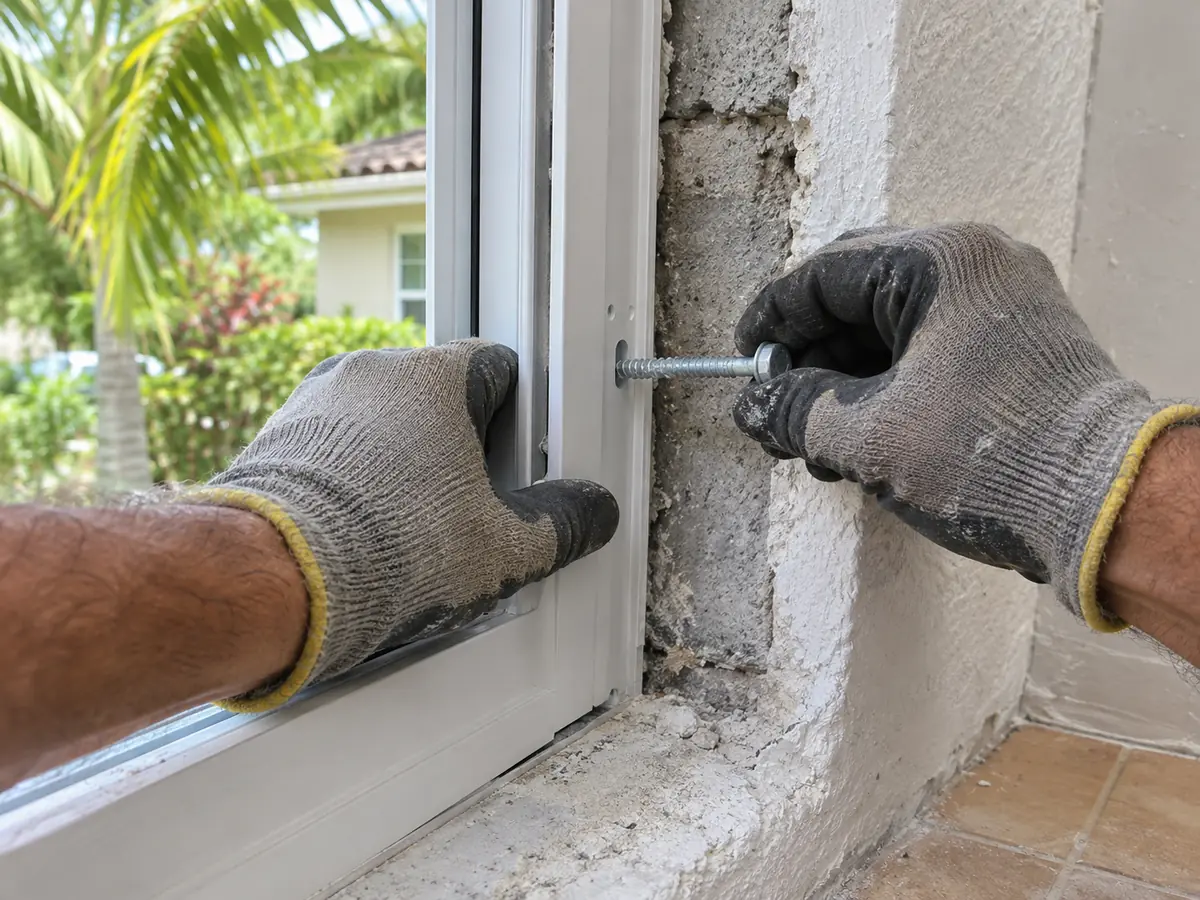
Our own crews install the windows, and we handle permits, engineering and inspections. The approved attachment details guide the work. Sealant has a role in weather sealing, but it does not replace the required structural connections.
Before you approve a replacement proposal, ask us to walk through these points:
- Which impact classification applies to your opening?
- Which product approval covers the proposed window and configuration?
- How does the selected assembly meet the opening's pressure requirements?
- How is the frame attached to the supporting structure?
- Which approval and inspection documents should you keep?
Keep those records with your home paperwork. If an installed window is later struck or visibly damaged, its original test result does not establish its present condition. Our guide to checking windows and doors after a storm covers that separate inspection step.
Start with a free in-home estimate to review your openings and approval requirements, or call (954) 637-7029.