Check your impact window screens before opening up
Cooler South Florida afternoons make an open window appealing, until you notice torn mesh or a loose screen corner. We explain what to check, what to leave alone and how to separate screen trouble from window trouble.
By the USA Windows & Doors team · · 4 min read

Start with the screen, not the glass
Before you open an impact window for a cooler afternoon, look at the insect screen from inside the room. A screen can appear intact across the middle while leaving a gap along an edge. Check the corners and the perimeter before assuming the opening is ready for ventilation.
The screen and the impact window do different jobs. Ordinary insect mesh helps keep insects outside when the window is open. It is not the impact-rated barrier, a security device or protection against a fall. Never lean against it or rely on it to contain a child or pet.
Opening the window also opens the glass barrier. A screen does not replace the protection of the closed, properly locked window. Close and lock your windows when leaving home or preparing for severe weather.
Look for gaps as well as tears
With the window safely accessible, inspect the mesh without pushing against it. Look for splits near the edges, loose material at corners and holes that blend into the view outside. A pale wall or piece of plain cardboard held behind the mesh can make small defects easier to see.
Then check the screen frame. It should sit in its intended position without a corner sticking out or an edge bowing away from the window. Do not press a loose screen outward to test whether it stays attached.
- Look for mesh pulling out of its retaining groove.
- Check for bent frame edges or separated corners.
- Notice missing, cracked or loose retaining hardware.
- Look for gaps between the screen frame and its seating surface.
Take photographs before moving anything. Include the whole window and a close view of the problem. That helps us distinguish damaged mesh from a fit or attachment issue.
Identify the release before removing anything
Screen removal is not the same on every impact window. Tabs, clips, springs and other retainers can look similar while working differently. Find the care instructions for your installed window before pulling a tab or lifting a corner. If the release method is unclear, stop and ask for help.
Do not pry against the window frame with a screwdriver, pull on the mesh or loosen screws that you have not identified. What looks like a screen fastener may belong to another part of the window. A stubborn screen is a reason to investigate, not pull harder.
Work only where you can remain securely positioned inside the home. Do not lean through an opening or attempt exterior removal from an elevated window. Keep children and pets away while the window is open, and arrange professional help when access is awkward.
Clean gently and keep screens matched
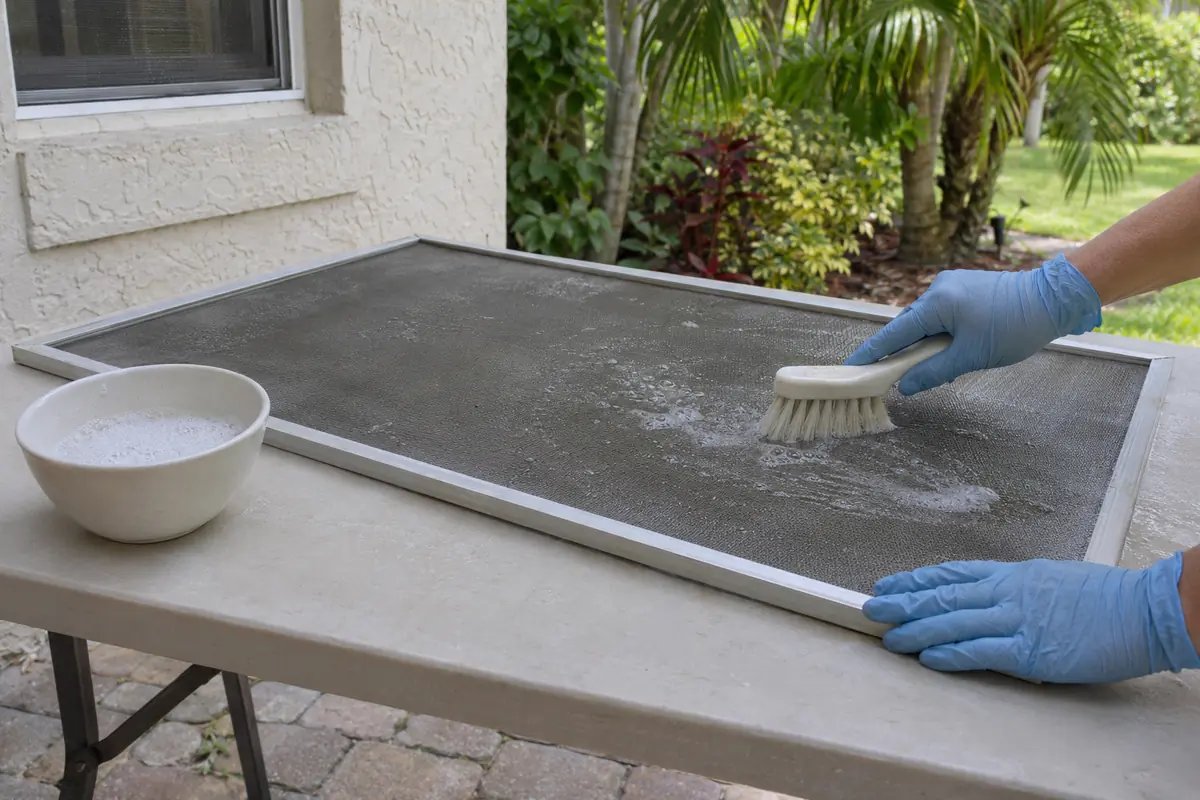
Follow the screen's specific cleaning instructions. Where washing is permitted, place the removed screen on a clean, supported surface and use mild soap, water and a soft brush with light pressure. Scrubbing hard can stretch mesh or damage its attachment. Avoid pressure washing, sharp tools and abrasive cleaners.
Handle the screen by its frame rather than its mesh. Support it as you move it, and let it dry completely before reinstalling it. Do not stack heavy items against screens or leave them where someone might step on them.
If you remove screens from several rooms, keep each with its original opening. Similar-looking windows can have screens with different dimensions or attachment details. A removable tag on the screen frame can help you keep track without marking the window glass.
For separate questions about chalky deposits or deteriorating finishes on the window itself, see our guide to salt residue and frame corrosion. Screen cleaning is not a repair for damaged window finishes.
Decide whether the mesh or frame needs repair
A torn mesh panel does not automatically mean the impact window needs replacement. If the screen frame is sound, replacing the mesh may be a practical repair. A bent frame, broken corner or damaged retainer needs a different assessment. Ask whoever handles the repair to check fit as well as appearance.
Do not choose replacement mesh solely because it feels heavier. Mesh options can differ in visibility and airflow, and the screen frame needs a compatible material and retaining method. Tell the repair professional what you want to improve before selecting a replacement.
A patch may cover a local tear, but it does not correct a screen that no longer seats properly. Avoid improvised screws, adhesive or sealant to hold a loose screen against the impact window. Have the intended attachment checked instead.
Check operation after the screen goes back
Reinstall the screen according to the product instructions, then check its perimeter from a safe position. The retainers should be engaged as intended, with no corner hanging loose. Do not use force to make an incorrectly positioned screen fit.
Open and close the window using its normal controls. If the screen rubs, catches or interferes with the sash or handle, stop and recheck its position. The window should close and lock without needing you to shove the screen aside.
Note whether the problem follows the screen or remains with the window. A loose screen corner points toward screen service. A sash that binds or a lock that does not engage needs window evaluation. When contacting us, describe which part moves incorrectly and share your photographs.
If your check raises questions about the impact window itself, request a free in-home estimate or call (954) 637-7029.